How to Paint Flowers Step by Step for Beginners?
Flowers are a great subject for beginner painters. If you want to learn how to paint flowers step by step, acrylic paint gives you an easy place to start.

You only need a few colors, a brush, and a simple method to follow. Many beginners struggle because they try to paint detailed flowers right away.
This often leads to messy shapes and frustration. A step-by-step process makes painting much easier.
First, you draw simple flower shapes. After that, you paint the main colors. Then you add leaves, highlights, and small details.
This article shows you how to paint flowers using simple techniques. You will learn how to paint petals, add depth with color, and create natural-looking leaves and stems. Each step focuses on basic skills, so you build confidence while you paint.
By the end of this guide, you will know a simple process you can use to paint many types of flowers. Grab your acrylic paints, prepare your brush, and let’s start your first flower painting.
Note: Some links in this article are affiliate links. If you buy a product using our link, we might get a small commission at no cost to you.
Supplies You Need for Acrylic Flower Painting
Before you start painting flowers, prepare a few basic supplies. Many simple materials help beginners focus on brush control, color mixing, and painting technique.
You do not need expensive tools. A small set of acrylic paints, a couple of brushes, and a good painting surface work well for a beginner's flower painting.
Many beginners start with a small set of materials. This approach keeps the process simple and helps you focus on the painting steps instead of the tools.
Here are the basic supplies you need:
• Acrylic paints(White, red, yellow, blue, green).
• Round brush for petals and leaves.
• Small detail brush for thin lines and details.
• Canvas or acrylic paper.
• Paint palette or plate for mixing colors.
• Cup of water for cleaning brushes.
• Paper towels for removing extra paint or water.
• Pencil for sketching the flower shapes.
Related blog post: 15 Easy Flower Drawings for Beginners.
How to Paint Flowers Step by Step
You will need to follow these simple steps to paint flowers with acrylic paint. Each step builds on the previous one, so you can create clear shapes, strong colors, and natural-looking petals.
Step 1. Sketch the Basic Flower Shapes
You can start by drawing the main flower shapes with a pencil. First, draw a small circle for the center of each flower.
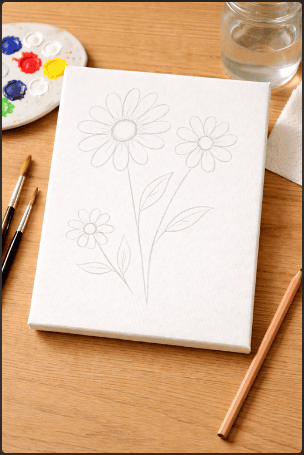
Then add simple oval or teardrop shapes around the circle to form the petals. Keep the sketch light and loose so the lines do not show through the paint later.
Simple sketches help beginners control the painting process. Instead of guessing where each petal should go, you follow clear shapes.
This method also helps you place flowers, stems, and leaves in a balanced way on your canvas.
Step 2. Paint the Flower Centers
The next step is to paint the center of each flower. You can use colors such as yellow, orange, or light brown.
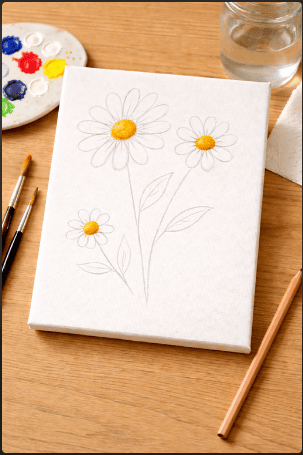
After that, apply the paint with small circular brush strokes so the center looks natural and textured.
Painting the center first helps guide the rest of the flower. After you paint the middle area, you clearly see where each petal should start. As a result, your flowers will look more balanced and easier to paint.
Step 3. Paint the First Layer of Petals
Now paint the first layer of petals around the flower center. Choose a simple color such as pink, red, purple, or white.
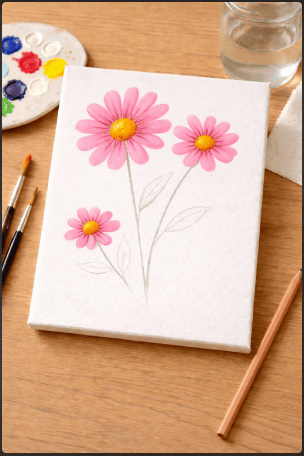
After that, you need to use a round brush and paint each petal, moving outward from the center.
Focus on the general shape of the petals during this step. Do not worry about details yet. A smooth base layer creates a clean foundation. It makes the next steps much easier.
Related blog post: How to Draw Roses Step by Step?
Step 4. Add Shadows and Highlights to Petals
After the base layer dries, add depth to the petals. Mix a slightly darker shade of your petal color. Then apply this darker paint near the center of the flower and between some petals.
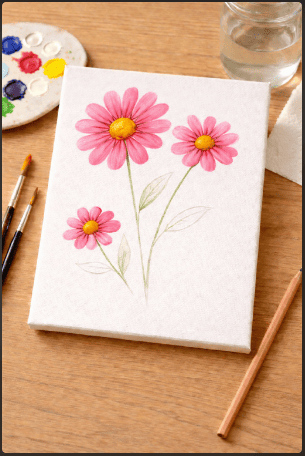
Next, add lighter strokes on the outer edges of the petals. This contrast creates depth and helps the petals look fuller. As a result, the flower begins to look more natural and less flat.
Step 5. Paint the Leaves and Stems
Once the flowers are finished, paint the stems and leaves. Mix green using blue and yellow if you want a natural shade. Use a smaller brush to paint thin stems that connect to the flowers.
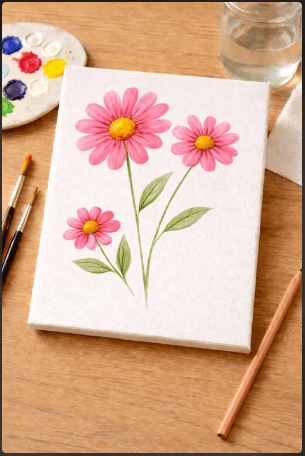
Then paint simple leaf shapes along the stems. Leaves do not need perfect shapes. Instead, focus on smooth strokes and balanced placement so the composition looks natural.
Step 6. Add Final Details
Finally, add small details to finish the painting. Use a detail brush to add thin lines on the petals or small dots in the flower centers. These details improve texture and make the flowers look more defined.
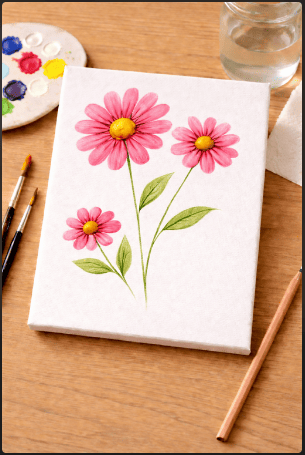
You can also add small highlights with white paint. Light touches on petals or leaf edges help create contrast. At this stage, step back and check the painting so you keep the final details clean.
Tips for Painting Flowers with Acrylic Paint
I always recommend that you start with simple flowers such as daisies or small wildflowers. These flowers have clear shapes and fewer petals.
As a result, you focus on brush control and basic petal strokes instead of complex details. Once you feel comfortable, move to flowers with more layers.
Also, use thin layers of paint. Thin layers give you better control and help colors stay clean. First, apply a light base layer. Then wait for the paint to dry before adding shadows or highlights.
This step keeps the petals sharp and prevents muddy colors.
In addition, practice different petal shapes. Some petals look round and wide, while others look narrow or pointed. By repeating simple strokes, you train your hand to create smoother and more natural petals.
Easy Flower Painting Ideas for Beginners
Painting different flowers helps you practice new shapes and color combinations. At the same time, simple flowers allow you to repeat the same basic steps. As a result, your painting skills improve with each new flower.
The first flower painting idea is a simple daisy, which works well for beginners. First, paint a yellow center. Then add long white petals around the circle. Because the shape stays simple, you focus on spacing and brush strokes.
Another good painting idea is a sunflower, which also makes a good beginner project. You can start with a large brown or dark yellow center.
After that, paint bright yellow petals around it. The strong contrast between the center and the petals helps you learn color balance.
Small wildflowers are another good option. These flowers often use tiny petals and thin stems. As a result, you practice lighter brush strokes and learn how to space flowers across the canvas.
You can also try painting a simple rose. Instead of painting a detailed rose, begin with loose curved strokes that form a spiral shape. Then add a few leaves and soft highlights to complete the flower.
More Reading: 11 Easy Painting Ideas on Canvas for Beginners.
Common Beginner Mistakes in Flower Painting
One common mistake is using too much paint on the brush. When the brush holds too much paint, the petals lose their shape and the colors mix.
Instead, remove extra paint on a paper towel before each stroke. This step helps you keep clean edges.
Another mistake is adding details before the base layer dries. When the first layer is still wet, new paint blends into it. As a result, the flower loses definition. Always wait for the base layer to dry before adding highlights or texture.
Some beginners also try to paint complex flowers too early. Flowers with many-layered petals require more control and practice.
You need to start with simple flowers first. Then move to more detailed flowers after you build confidence with basic shapes.
Conclusion
As you can see, painting flowers with acrylic paint becomes easier when you follow simple steps. First, you need to sketch the flower shapes. After that, you paint the center and petals. Then you add leaves and small details.
You can start with simple flowers and practice often. Over time, you will improve your brush control and learn how to paint different flower shapes.
Thank you for reading this article. I hope you have found it helpful.
More blog posts:






FAQs About Painting Flowers
Here are some frequently asked questions about flower painting:
How do beginners paint flowers with acrylic paint?
Beginners start by sketching simple flower shapes with a pencil. First, draw the flower center and basic petal outlines. Next, paint the center, then the petals, and finally the leaves and stems.
After the base colors dry, add shadows, highlights, and small details. This step-by-step method keeps the process clear and helps beginners build the painting layer by layer.
What are the easiest flowers to paint for beginners?
Daisies, sunflowers, and small wildflowers are among the easiest flowers to paint. These flowers use simple shapes and clear petal patterns.
Because the structure stays simple, beginners focus on brush strokes and color placement. With practice, these flowers help you gain confidence before moving to more detailed subjects.
Which brushes are best for painting flowers?
A medium round brush works well for most flower petals and leaves. The rounded tip allows you to paint smooth curves and soft edges.
In addition, a small detail brush helps you paint thin stems, small lines, and flower centers. With these two brushes, beginners handle most flower painting techniques.
What colors are best for acrylic flower painting?
Basic colors work best for beginners. White, red, yellow, blue, and green allow you to mix many flower shades.
For example, red and white create pink petals, while blue and red create purple. By mixing colors, you also create natural green shades for leaves and stems.
Is acrylic paint good for beginner painters?
Acrylic paint works well for beginners because it dries quickly and covers surfaces easily. If you make a mistake, wait for the paint to dry and paint over the area.
In addition, acrylic paint works on many surfaces such as canvas, acrylic paper, and wood. This flexibility makes acrylic painting a good choice for beginners who want to practice and improve their skills.