11 Easy Painting Ideas on Canvas for Beginners
If you're looking for easy painting ideas on canvas, I’m guessing you’ve got a blank canvas sitting somewhere in your room right now. And you keep thinking: “I want to paint… but what?”
I’ve been there. You feel motivated. You buy the paints. You set everything up. Then your brain goes empty.
Here’s the good news. You don’t need to be “naturally talented”. You don’t need fancy techniques. And you definitely don’t need to turn your first painting into a museum piece.
You need simple ideas that look good and don’t stress you out.
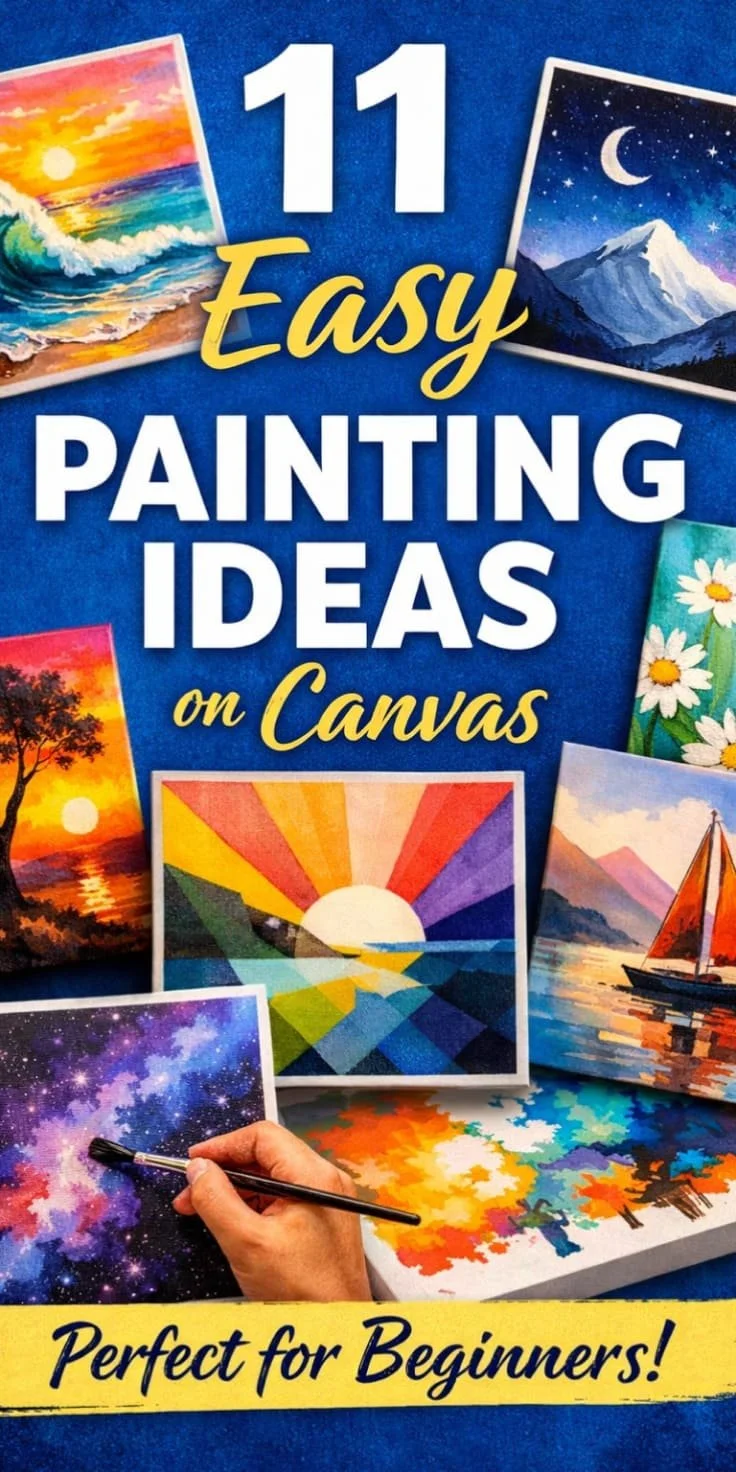
You can start with simple designs like sunsets, abstract color blends, flowers, or trees. These ideas don’t require advanced skills. You can finish most of them in one sitting.
In this article, you will find easy painting ideas on canvas that are good for beginners and quick to finish. These ideas will help you build confidence, improve your skills, and create artwork you will feel proud to hang on your wall. So let’s get started.
Easy Painting Ideas on Canvas
Canvas painting is one of the easiest ways to express yourself. You don't need to be a pro to create something beautiful. Here are some easy paintings for beginners on canvas:
1. Simple Sunset With Silhouettes
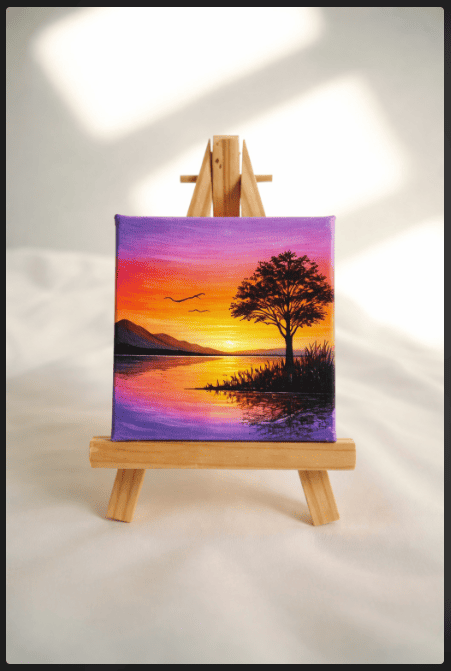
If you want a painting that looks beautiful but is beginner-friendly, start with a sunset. It’s one of the safest and most rewarding easy painting ideas on canvas.
Sunsets work because they rely more on blending than detail. And blending is forgiving.
Here’s how to approach this:
Use three colors like orange, pink, and purple.
Blend them horizontally while the paint is still wet.
Avoid overmixing to prevent muddy colors.
Let the sky dry before adding silhouettes.
After that, add bold black shapes in the foreground. You can also add trees, birds, and mountains. Keep them simple. The strong contrast between bright sky and dark shapes creates depth instantly.
Helpful tip: Leave a thin bright strip near the horizon. That small detail makes the sunset feel more realistic.
Related blog post: Easy Drawing of a Tree with Roots.
2. Abstract Color Blend
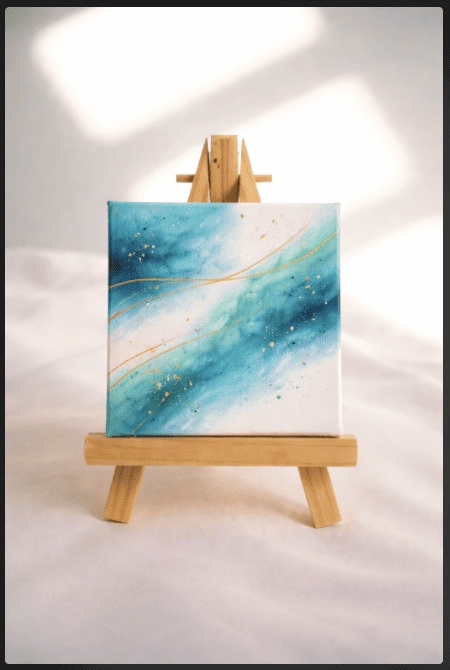
If you tend to overthink your art, abstract painting gives you freedom. There’s no “wrong” result, which makes it great for beginners.
Start by choosing three colors that naturally work together. For example:
Blue, teal, and white.
Beige, brown, and gold.
Pink, coral, and white.
Blend them softly across the canvas using a brush or sponge. Then add subtle splatters or thin gold lines for detail.
Abstract art remains one of the most popular categories in modern home decor because it blends easily with different styles. So you’re not only practicing techniques, you’re creating something you can actually hang on your wall.
For the painting supplies, I recommend buying good canvas boards on Amazon, some brushes, and acrylic paint.
3. Minimalist Line Art
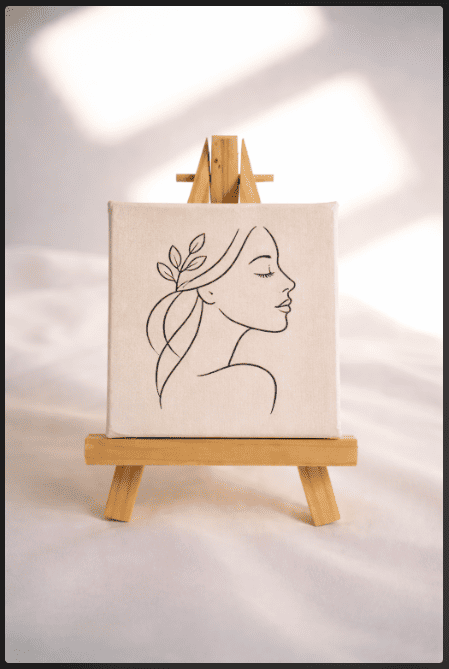
If you love clean and modern decor, minimalist line art is a great option. It looks professional but stays simple.
To start this, paint a soft neutral background first. Let it dry fully. Then lightly sketch a simple face outline or plant using a pencil. Keep it loose and natural.
When you’re ready to paint:
Use a thin brush with black acrylic.
Rest your pinky on the canvas for control.
Move slowly and confidently.
Minimalist art works because less detail often feels cleaner and more beautiful.
4. Easy Flower Painting
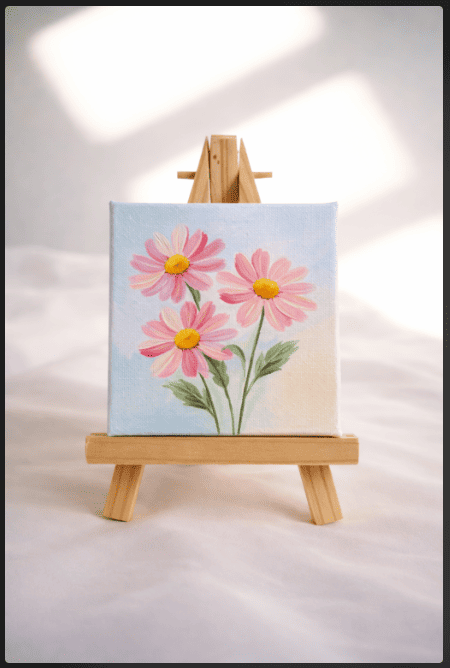
Flowers are one of the most searched beginner painting subjects online. And that’s for a good reason. They’re simple shapes that feel expressive.
To start with this idea, break the flower into basic parts:
A circle for the center.
Oval strokes for petals.
Straight lines for stems.
Paint your background first to avoid messy edges. Then layer petals using two shades of color. After that, add a darker shade near the center to create depth.
Use quick strokes. They look more natural. If you move too slowly or keep fixing the same spot, the paint can look stiff. Add the stroke and leave it.
5. Layered Mountain Landscape
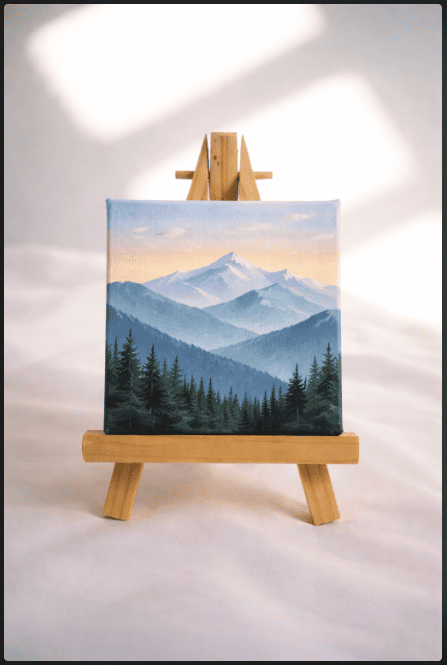
If you want to learn depth without complicated details, paint mountains. This idea teaches you perspective in a simple way.
Start with the sky. Then add mountain layers one by one.
Follow this rule. The closer the object, the darker the shade.
So you need to:
Paint a light blue mountain in the distance.
Add a slightly darker layer in front.
Finish with the darkest layer closest to you.
You can drag white paint lightly across the top edges for snow. That small texture makes a big difference.
6. Ocean Waves
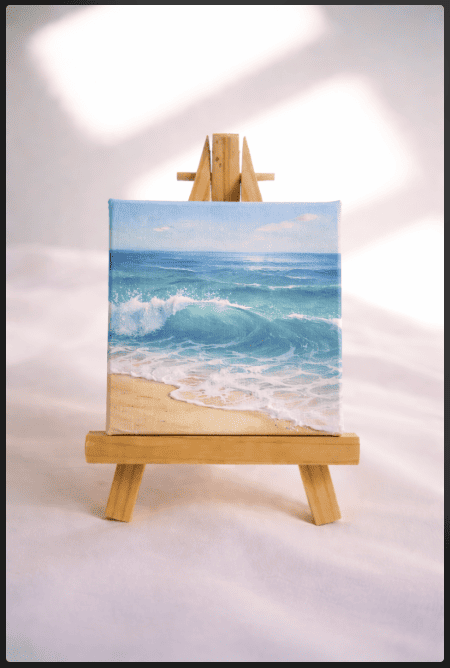
An ocean painting feels calm and dynamic at the same time. It’s great if you want movement in your artwork.
You can start with a light blue base. You need to blend darker blue toward the bottom of the canvas. Then add white paint in curved lines for wave foam.
Important tip: Dab the white paint instead of dragging it. Dabbing creates a realistic texture.
If you want extra detail, add thin horizontal strokes in the water to suggest motion.
7. Quote Canvas Art
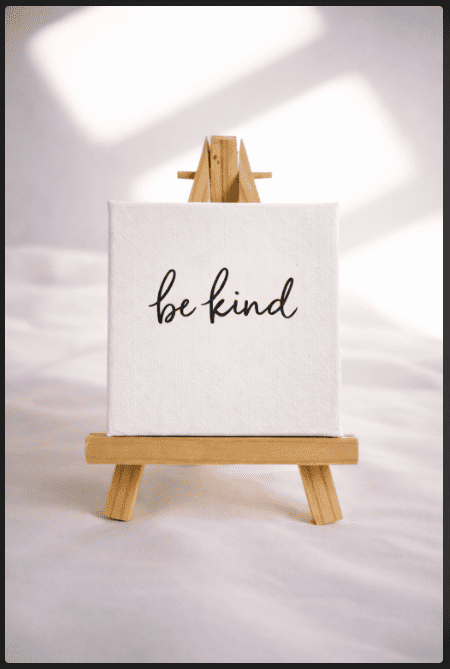
If you enjoy words as much as images, quote canvas art is a strong choice. It’s simple and meaningful.
Choose a short quote. Three to five words are ideal. Longer quotes become hard to space evenly.
Follow this process:
Paint a clean, solid background.
Let it dry completely.
Sketch your lettering lightly with a pencil.
Paint over it carefully with a fine brush or paint pen.
Step back often to check alignment. Spacing matters more than perfect handwriting.
Related posts:
8. Galaxy Night Sky
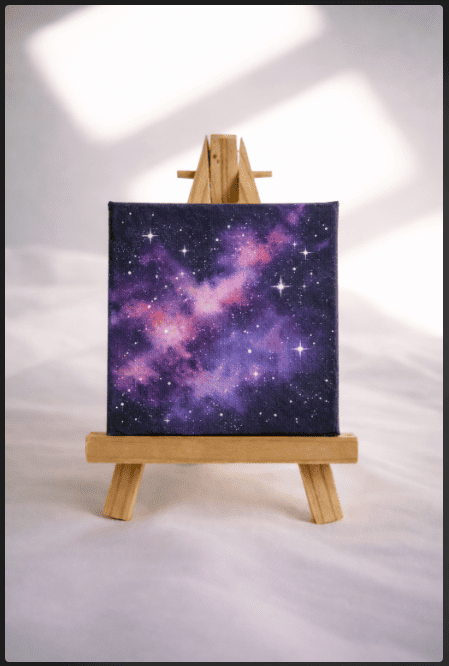
If you want something bold and dramatic, try a galaxy painting. It looks advanced, but the steps are simple.
You can start with a black or deep navy background. After that, use a sponge to dab purple and pink in soft cloud shapes.
After that:
Flick white paint using a toothbrush for stars.
Add a few larger stars with a small brush.
Leave some dark areas for contrast.
The contrast between dark space and bright stars creates a strong visual impact with minimal effort.
9. Geometric Color Blocking
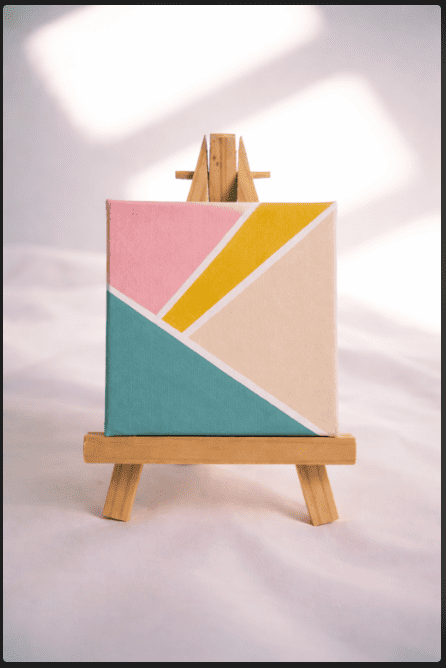
If you prefer structured and modern designs, geometric painting is a solid option. It focuses on clean lines and strong color choices.
Use painter’s tape to divide the canvas into shapes like triangles or rectangles. Make sure to press the edges firmly to prevent bleeding.
Then:
Paint each section a different color.
Stick to 3 or 4 colors for balance.
Remove the tape before the paint fully dries.
This idea helps you practice precision and planning.
10. Tree Silhouette
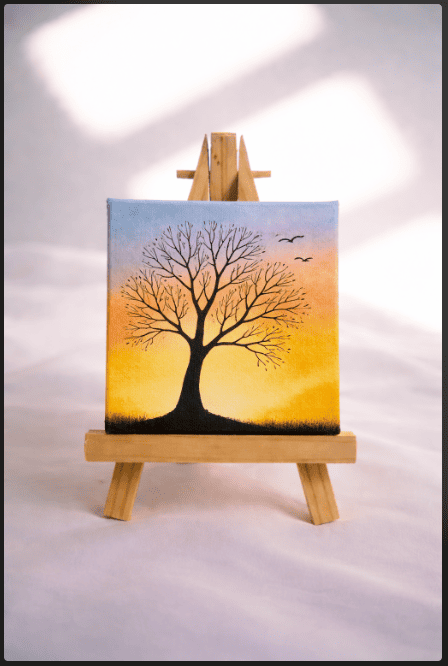
A tree silhouette combines blending and bold shapes in one painting. It’s simple, but powerful.
Create a gradient background first. For example, blue fading into white or orange fading into yellow. Let it dry.
After that, sketch a tree trunk and branches. Trees are naturally irregular, so don’t aim for perfect symmetry.
You can use black paint and a small round brush to fill it in. Optional additions include birds or falling leaves. Keep it minimal so the silhouette stays the focus.
11. Texture Painting With Palette Knife
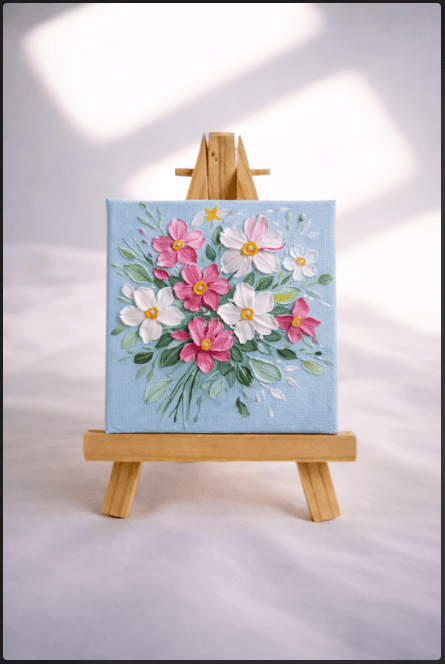
If you want your canvas to stand out physically, not only visually, try texture painting. It adds dimension easily.
Instead of a brush, use a palette knife to apply thick acrylic paint. Spread it in upward or circular motions to create flowers, clouds, or abstract forms.
Keep these tips in mind:
Use heavy body acrylic for better texture.
Apply paint thickly, but don’t press too hard.
Let it dry naturally for at least 24 hours.
Texture paintings catch light differently depending on the angle. That gives your artwork a dynamic quality that flat paintings don’t have.
How to Start Painting on Canvas as a Beginner
To start painting on Canvas as a beginner, you have to start simple. You can pick acrylic paint because it dries fast and it’s easy to control. Choose a small canvas so you do not feel overwhelmed. An 8x10 size works well.
Lightly sketch your idea with a pencil before you paint. This helps you place everything correctly. Paint the background first, then the bigger shapes, then the small details last.
Limit your colors to three to five shades. Too many colors make your painting look messy. Use simple color palettes. For example, blue, white, and black work well for ocean scenes.
If you are stuck, try a sunset, simple flowers, or an abstract design. These are easy to finish and build confidence.
Related blog post: 15 Easy Whale Shark Drawing Ideas.
Beginner Tips and Supplies You Need for Easy Canvas Painting
For the supplies, you only need a few basics: a pre-primed canvas, acrylic paints, three brushes, water, and paper towels. You do not need expensive supplies to get good results.
Paint in thin layers and let each layer dry before adding more. Rinse your brush every time you change colors so your shades stay clean.
Step back and look at your painting from a distance. You will notice balance issues faster.
Your goal is not perfection. Your goal is to finish. When you complete several small paintings, you improve faster than you think.
Conclusion
Painting on canvas does not need to feel complicated. You do not need advanced skills or expensive supplies to get started. You only need a simple idea, a few basic tools, and the willingness to finish what you start.
The 11 easy painting ideas in this post are here to help you practice without pressure. Pick one, set aside an hour, and focus on completing it. Each finished canvas builds your confidence and improves your control.
If you stay consistent and paint a few times each week, you will see clear progress within a month. Start small, keep going, and enjoy the process.
Thank you for reading. I hope you’ve found this guide useful.
More blog posts:
Frequently Asked Questions
Here are some FAQs about painting:
What is the easiest thing to paint on a canvas?
The easiest things to paint are simple shapes and scenes with soft blends. Sunsets, abstract color blocks, flowers, and trees are great starting points.
These subjects do not require perfect details. You can focus on color and basic brush strokes instead of precision. Many beginners start with a sunset because you only blend a few colors and add a simple silhouette.
What are the 7 rules of painting?
Here are seven basic rules that help beginners improve faster:
Start with a simple composition.
Sketch lightly before you paint.
Paint background first, details last.
Use limited colors. Three to five is enough.
Work in thin layers and let them dry.
Clean your brushes often.
Step back and look at your work from a distance.
These rules keep your painting clean and balanced.
What should a beginner painter paint first?
Start with something small and simple. A sunset, a single flower, or an abstract design works well. Choose a subject with large shapes and soft transitions.
Avoid detailed portraits or complex city scenes at the beginning. Your goal is to practice control and finish the painting.
What can I paint when I am bored?
When you feel bored, try quick and fun ideas. Paint mini canvases with simple patterns, a galaxy background, or experiment with color blending.
You can also repaint the same idea in different color combinations. This keeps painting interesting and helps you improve without pressure.