15 Easy Flower Drawings for Beginners: Step-by-Step
If you want to improve your sketching skills, I recommend starting with easy flower drawings because they give you the perfect balance of simple shapes and creative freedom.
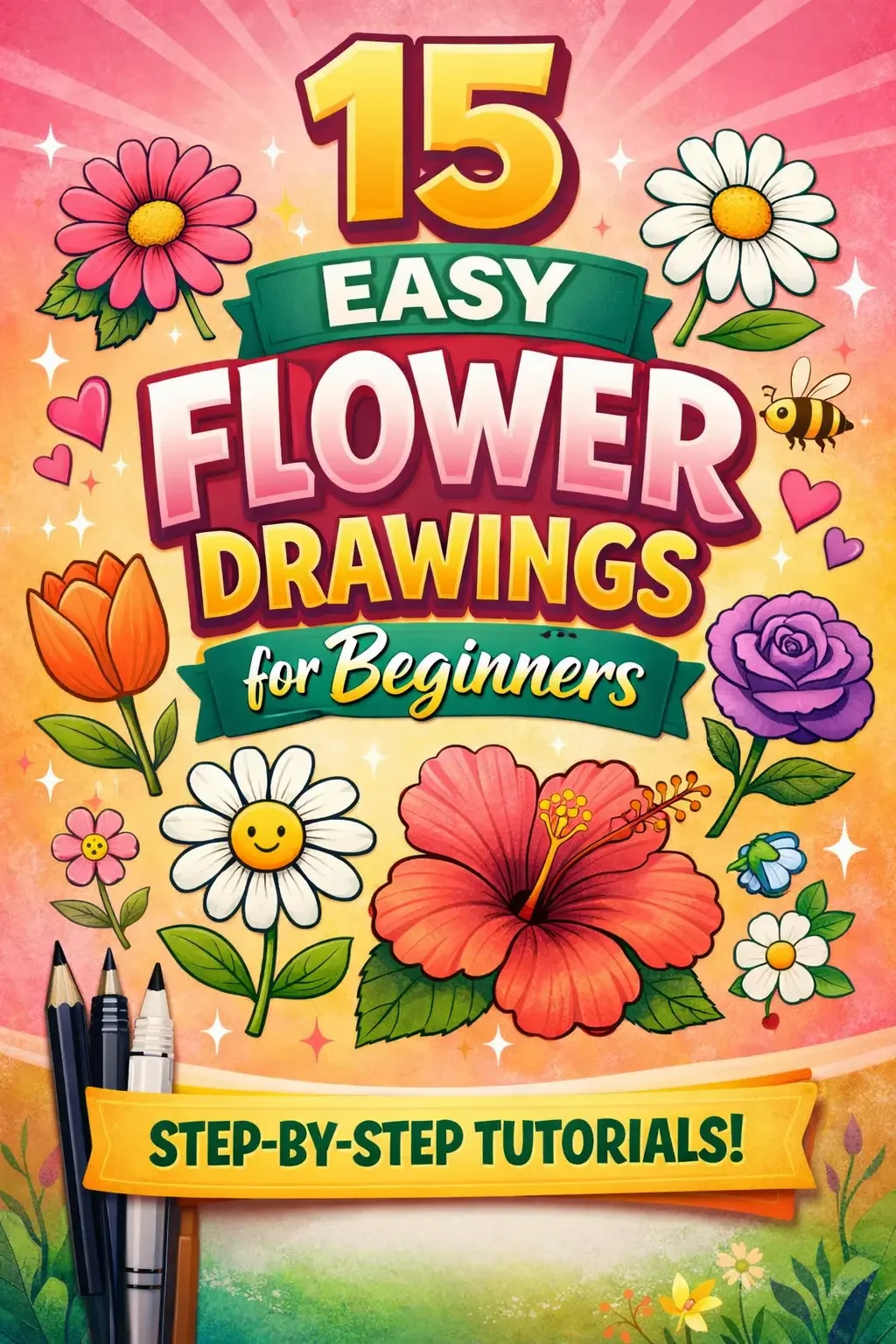
You can draw them quickly, repeat them often, and see progress fast. In this article, you will learn about 15 easy flower drawings so you can practice with confidence.
The best part is that you don't need any special skills or expensive drawing supplies to get started. You can start with a pencil and a piece of paper.
Each flower in this article is designed to be beginner-friendly, so you won't feel lost or frustrated along the way.
Note: Some links in this article are affiliate links.
15 Easy Flower Drawings to Try Today
Below, you will find beginner-friendly flower sketches that focus on clean shapes and simple structure. First, you will understand the basic form of each flower. Then, you can follow the steps and draw it yourself.
1. Simple Daisy Drawing
First, let’s start with a classic. A simple daisy drawing works perfectly for beginners because it uses one center circle and repeated oval petals. Since the design repeats the same shape, you can focus on spacing and symmetry instead of worrying about detail.
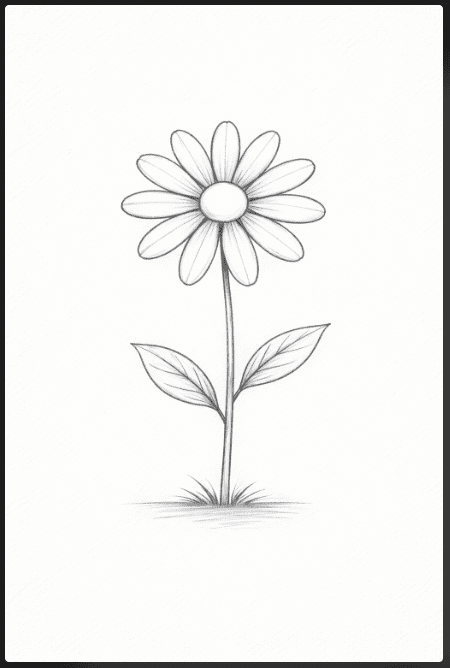
Step 1: Draw a small circle in the center of your page.
Step 2: Add long oval-shaped petals around the circle. Keep them evenly spaced.
Step 3: Draw a straight stem and two simple leaves.
As you practice, slightly vary the petal lengths. This small adjustment makes your flower look more natural.
Related blog post: How to Draw Roses Step By Step?
2. Easy Tulip Drawing
Next, try an easy tulip drawing. Tulips rely on curved lines, so they help you improve flow and control. Because they do not require layered petals, they feel less overwhelming.
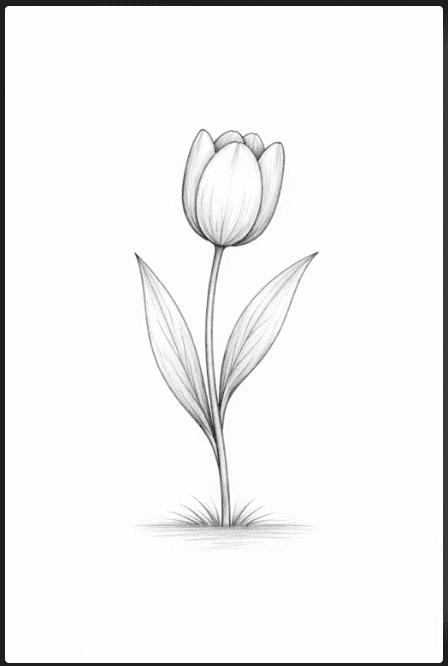
Step 1: Draw a U shape for the base of the flower.
Step 2: Add two curved lines at the top to create three rounded petals.
Step 3: Draw a long curved stem and one or two leaves.
Keep your lines steady and avoid sketching over them too many times. Clean strokes make a big difference here.
3. Cute Sunflower Drawing
Now, move to a cute sunflower drawing. Sunflowers allow you to practice repetition while keeping the structure clear. The large center acts as a guide, which makes placing the petals easier.
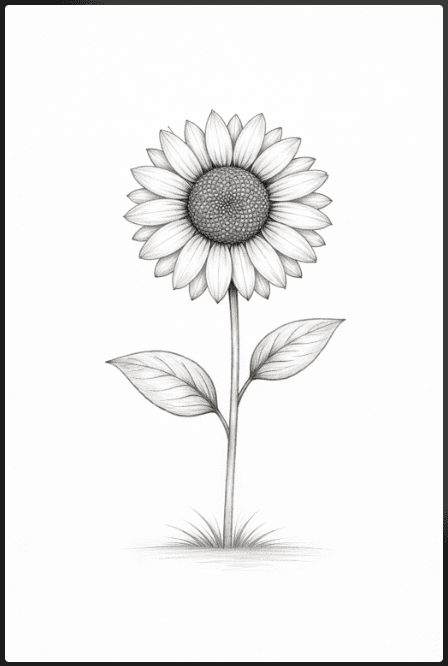
Step 1: Draw a large circle for the center.
Step 2: Add short and rounded petals around the circle.
Step 3: Fill the center with small dots for texture.
Step 4: Draw a thick stem and two leaves.
If you darken the center slightly, you instantly add depth and contrast.
4. Basic Rose Drawing
After that, try a basic rose drawing. Although roses look complex, you can simplify them using a spiral method. Instead of drawing each petal separately, you build outward from the center.
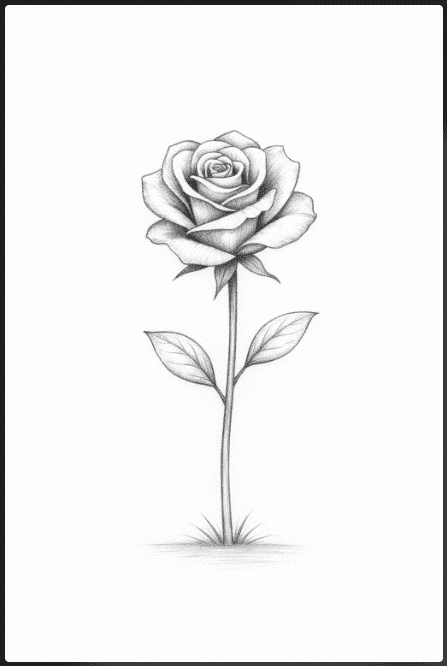
Step 1: Draw a small spiral in the middle.
Step 2: Add curved lines around the spiral to form outer petals.
Step 3: Continue layering curved shapes outward.
Step 4: Draw a short stem and small leaves.
Do not aim for perfection. Loose and slightly uneven lines make roses look more realistic.
5. Simple Lavender Sketch
If you prefer minimalist designs, draw a simple lavender sketch. Lavender uses small and repeated buds along a thin stem, so it helps you practice precision.
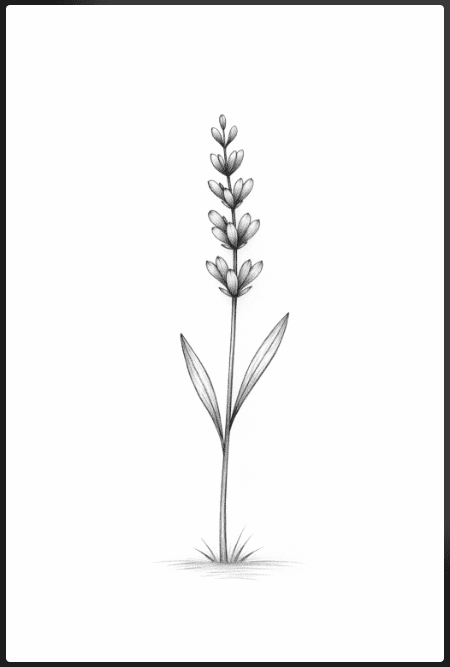
Step 1: Draw a thin vertical line for the stem.
Step 2: Add small oval buds along the top half of the stem.
Step 3: Draw two thin leaves near the base.
You can draw several stems side by side to create a bouquet effect.
6. Easy Hibiscus Drawing
Next, draw an easy hibiscus flower. Hibiscus flowers have five wide petals and a long center detail, which gives them a bold appearance while keeping the structure simple.
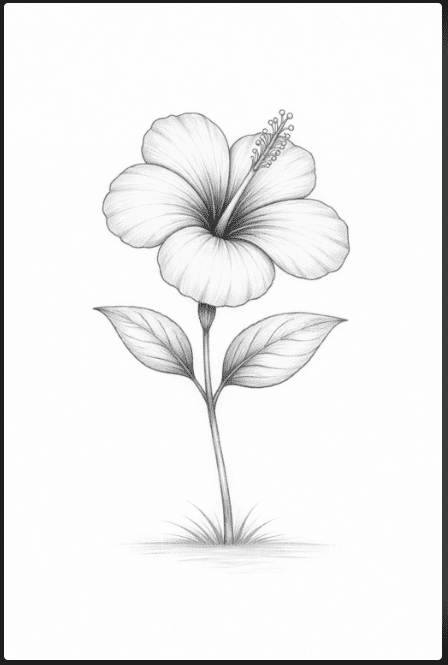
Step 1: Draw five large and rounded petals connected at the center.
Step 2: Add a long line extending from the middle for the stamen.
Step 3: Draw small circles at the tip of the stamen.
Step 4: Add a few leaves behind the flower.
Focus on smooth edges to keep the petals looking soft.
7. Minimalist Poppy Drawing
Then, try a minimalist poppy drawing. Poppies look soft and relaxed, so you do not need sharp outlines or heavy detail.
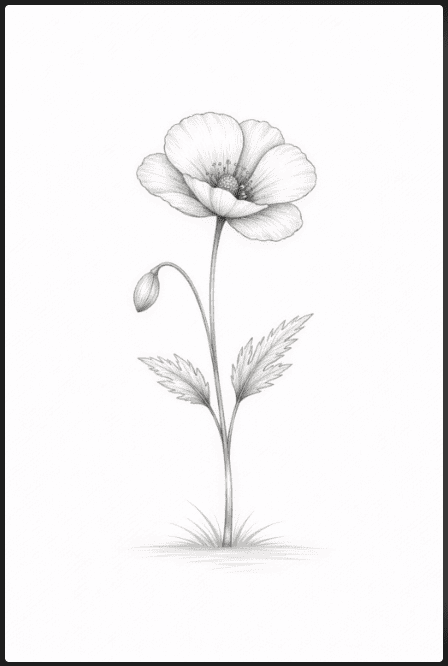
Step 1: Draw four loose, rounded petals.
Step 2: Add a dark circle in the center.
Step 3: Draw a thin and slightly curved stem.
Because the petals overlap gently, allow the lines to stay light and natural.
8. Cartoon Flower Drawing
If you want something playful, draw a cartoon flower. This style feels fun and approachable, especially if you are new to drawing.
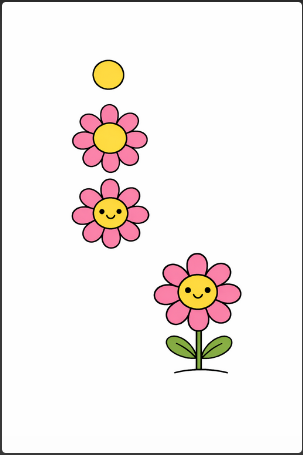
Step 1: Draw a circle for the center.
Step 2: Add rounded petals around it.
Step 3: Draw two small eyes and a smile inside the center.
Step 4: Add a simple stem and leaves.
This type of easy flower drawing works great for doodles and planners.



9. Cherry Blossom Sketch
After that, practice a cherry blossom sketch. Cherry blossoms have five small petals and look best when grouped.
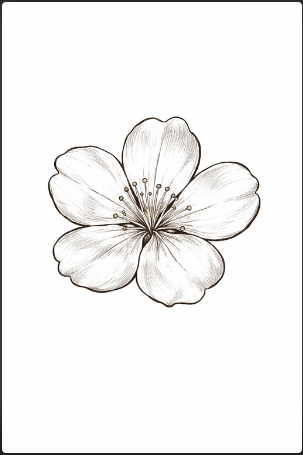
Step 1: Draw a small circle.
Step 2: Add five rounded petals with small notches at the tips.
Step 3: Draw thin branches and attach multiple blossoms.
Keep your lines light to capture their delicate appearance.
10. Simple Lily Drawing
Now, try a simple lily drawing. Lilies look elegant, yet you can break them into manageable curved shapes.
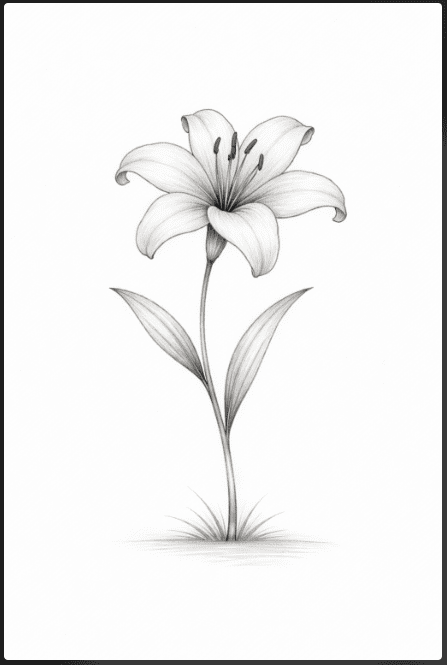
Step 1: Draw three long curved petals facing outward.
Step 2: Add three more petals behind them.
Step 3: Draw thin stamens in the center.
Make sure to focus on confident curves instead of short and sketchy strokes.
11. Easy Dandelion Drawing
Next, draw an easy dandelion. This flower helps you practice fine lines and consistent spacing.
Step 1: Draw a small circle.
Step 2: Add many thin lines radiating outward.
Step 3: Draw a long and thin stem.
Vary the line lengths slightly to avoid a stiff look.
12. Small Wildflower Drawing
Then, try a small wildflower drawing. These simple flowers fill space nicely and look great when repeated.
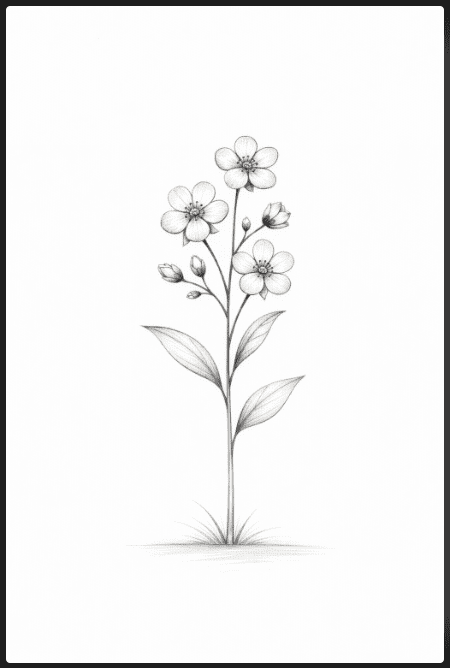
Step 1: Draw a small circle in the center.
Step 2: Add short petals around it.
Step 3: Draw a thin stem and small leaves.
You can draw several wildflowers together to create a natural scene.
13. Easy Peony Drawing
After that, practice an easy peony drawing. Peonies appear full and layered, yet you can simplify them with curved overlapping shapes.
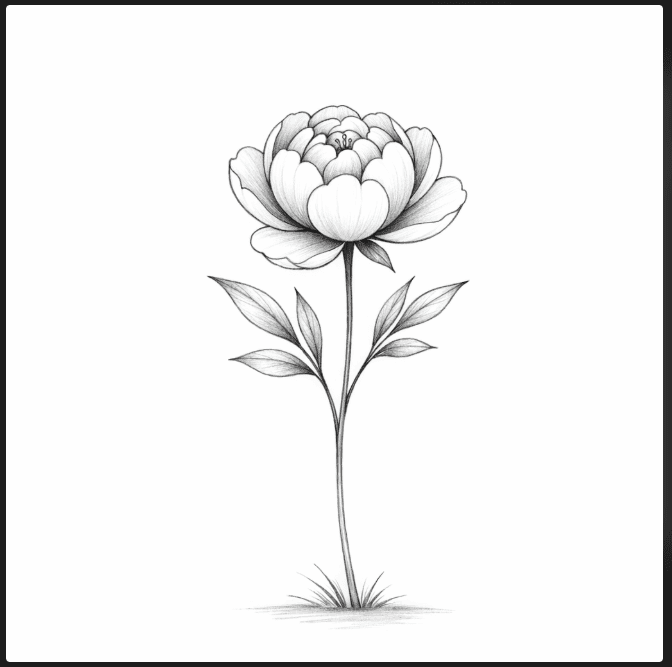
Step 1: Draw a loose circle as a guide.
Step 2: Add many rounded petals inside and around the circle.
Step 3: Overlap petals to create depth.
Step 4: Draw a short stem and leaves.
Work gradually and build layers instead of defining every edge sharply.
14. Simple Orchid Drawing
Next, draw a simple orchid. Orchids have a distinct symmetrical shape, which helps you practice balance.
Step 1: Draw one large center petal.
Step 2: Add two wide petals on each side.
Step 3: Draw a small oval detail in the center.
Step 4: Add a thin stem.
Keep the proportions balanced so the flower feels structured.
15. Four-Petal Easy Flower
Finally, draw a four-petal flower. This is one of the most beginner-friendly and easy flower drawings you can practice daily.
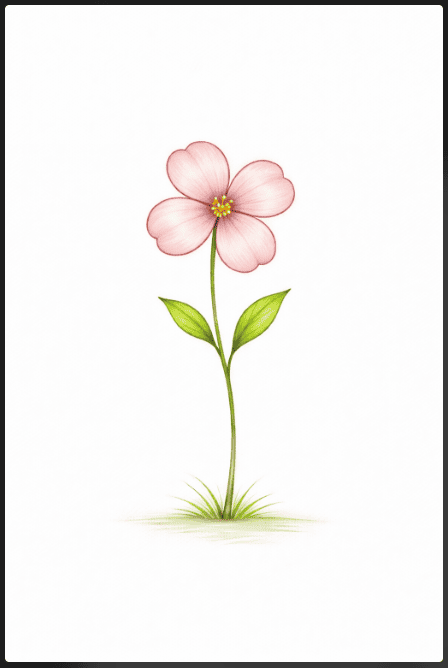
Step 1: Draw a small circle.
Step 2: Add four rounded petals evenly spaced around it.
Step 3: Draw a short stem and two simple leaves.
Because the structure is simple, you can repeat this design multiple times to improve control and spacing.
What You Need to Start Drawing Flowers
You do not need special or expensive supplies to create beautiful flower sketches. In fact, simple tools work best when you are learning.
When you keep your materials basic, you focus more on your lines and shapes instead of the tools.
Start with these essentials:
A regular pencil for sketching.
A soft eraser to fix mistakes.
Plain paper or a simple sketchbook.
Once you feel more confident, you can add:
A black pen to outline your final drawing.
Colored pencils or markers to bring your flowers to life.
At the beginning, avoid using too many tools. Instead, practice controlling your pencil and building clean shapes. As your skills improve, you can experiment with shading and color.
Simple tools are more than enough to create strong flower drawings.
Basic Shapes Used in Easy Flower Drawings
Every flower you draw starts with basic shapes. When you understand these shapes, drawing becomes much easier. Instead of thinking about the full flower, you break it down into small parts.
Most easy flower drawings use:
Circles for the center of the flower.
Ovals or rounded shapes for petals.
Curved lines for stems.
Almond shapes for leaves.
For example, a daisy starts with a circle, then you add oval petals around it. A tulip begins with curved lines that form a simple cup shape. When you practice these shapes again and again, your hand becomes steadier. As a result, your flowers look cleaner and more balanced.
Before adding details, spend time drawing just circles and ovals. This small habit will improve all your beginner flower sketches.
Conclusion
As you can see, now you have 15 easy flower drawings you can practice anytime. Each flower uses simple shapes and clear steps, so you never feel stuck or confused.
When you break flowers into circles, ovals, and curved lines, drawing becomes much easier and more enjoyable.
You can start with one flower and repeat it a few times. Then move to another design and challenge yourself slightly. As you practice, your lines will look smoother, and your spacing will improve.
Most importantly, stay consistent. A few minutes of daily practice will help you build confidence and control faster than drawing once in a while.
Keep your tools simple, focus on clean shapes, and enjoy the process. The more you draw, the better your flower sketches will look.
More blog posts:


Frequently Asked Questions
Here are some FAQs related to flower drawing:
What is the easiest flower to draw for beginners?
The easiest flower to draw is a four-petal flower or a simple daisy. Both use a center circle and repeated petals, which makes them easy to control and balance.
How do you draw a flower step by step?
First, draw a small circle for the center. Next, add petals around the circle using oval or rounded shapes. Then draw the stem and leaves using curved lines. Finally, add light shading if you want more depth.
How can I make my flower drawings look more realistic?
You can improve realism by slightly changing the size of each petal. Also, add soft shading near the base of the petals and avoid making every line perfectly straight or symmetrical.
How often should I practice drawing flowers?
Practice a little every day if possible. Even 10 to 15 minutes of focused drawing helps you improve your line control and shape accuracy over time.
Do I need to use color in easy flower drawings?
No, you do not need color. You can create beautiful flower sketches using only pencil. However, adding color with pencils or markers can make your drawings more vibrant and fun.