15 Sketchbook Ideas for Drawings to Improve Your Art
If you are looking for sketchbook ideas for drawings, you are not alone. Many beginners and even experienced artists struggle with what to draw next.
I know a blank page creates hesitation, which slows your progress and breaks your routine.
I have worked through this same problem by using structured sketchbook prompts to stay consistent and improve faster.
So instead of waiting for inspiration, you focus on simple and repeatable exercises that build real skills over time.
In this article, you will find 15 practical sketchbook ideas you can start today. Each one targets a specific area like observation, creativity, or composition.
This will help you make steady progress with every page. So let’s get started.
Note: Some links in this article are affiliate links. We might get a small commission at no cost to you if you buy using our link.
Supplies You Need for Sketchbook Drawing
You do not need expensive tools to get started with sketchbook drawing. Instead, you can focus on simple supplies that help you draw consistently and improve over time.
Here are some basic supplies and tools you need:
Sketchbook: Choose A5 or A4 size. Use paper that works for pencil and ink. A hardcover lasts longer and feels more stable.
Pencils: Start with HB, 2B, and 4B. HB for light sketches, while 2B and 4B add shading and depth.
Eraser: Use a kneaded eraser for soft changes and a regular eraser for clean corrections.
Fineliners or Ink Pens: Use these for clean outlines and details. Different tip sizes improve line variation.
Sharpener: Keep your pencils sharp to maintain clean and precise lines.
Optional Tools: Add colored pencils or markers for color. You can also use a ruler for basic structure.
Keep your setup simple. The goal is to remove friction so you draw more often and fill your sketchbook with ideas.
15 Sketchbook Ideas for Drawings
If you often feel stuck on what to draw next, these sketchbook ideas will give you clear direction. Each idea focuses on a specific skill, so you improve with every page you complete.
Here are some sketchbook ideas for you:
1. Draw Everyday Objects Around You
This idea builds your observation skills using simple objects you already have. You do not need references or special tools. You train your eye to see shapes, proportions, and details more clearly.
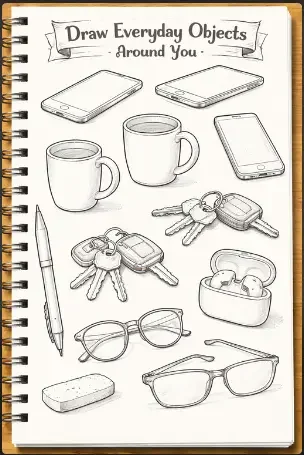
Look around you and pick one object, like your phone, a cup, or your keys. Place it in front of you and spend a few seconds studying it before you start.
Focus on the overall shape first, not the small details. Then sketch it lightly so you can adjust proportions easily.
After your first drawing, repeat the same object from a different angle. This step is important because it forces you to understand the structure, not copy what you see.
Over time, this practice will make your drawings more accurate and confident.
Related blog post: 15 Easy Acrylic Marker Drawing Ideas.
2. Character Design Practice
This idea helps you build creativity while improving your understanding of faces, bodies, and clothing. You move from copying to creating your own ideas.
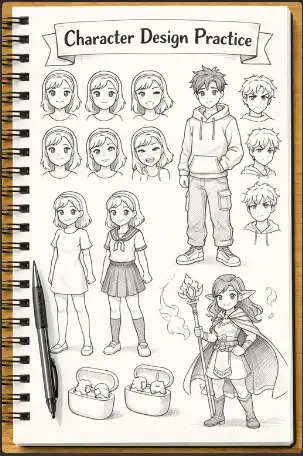
You should start with a simple character. Do not overcomplicate it. Focus on basic proportions and a clear silhouette.
Once you have a base, begin to explore variations like different hairstyles, outfits, and facial features.
Then push the idea further by drawing the same character with different emotions or poses. This helps you understand how design changes based on movement and personality.
As you repeat this process, you will develop your own style and visual language.
3. Nature Sketches
This idea trains your eye to handle complex shapes and textures. Nature gives you variety, which improves your ability to observe and simplify.
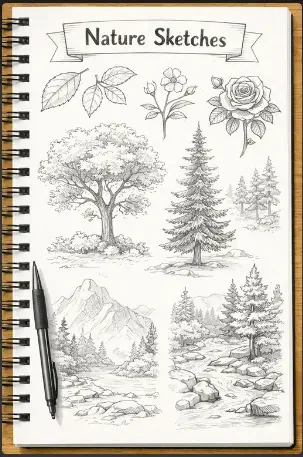
Choose something simple like a leaf, a plant, or a tree. You can start by breaking it down into basic shapes before adding details. This makes the process easier and prevents you from getting overwhelmed.
Next, focus on light and shadow. Notice where the light hits and where shadows fall. Add simple shading to show depth. With regular practice, your drawings will look more natural and structured.
4. Gesture Drawing(Quick Poses)
This idea helps you capture movement and energy instead of focusing on details. It improves flow and makes your drawings feel more alive.
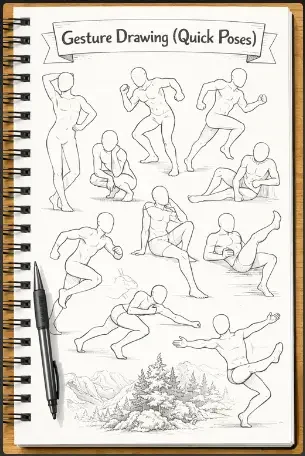
Set a timer for 30 seconds to 2 minutes. Then draw quick poses of people or figures. Focus on the overall movement, not accuracy. Use loose lines and avoid erasing.
Repeat this multiple times in one session. Each drawing builds speed and confidence. Over time, you will notice better rhythm and more natural poses in your work.
5. Facial Expressions Sheet
This idea improves your ability to show emotion through drawing. It teaches you how small changes affect the face.
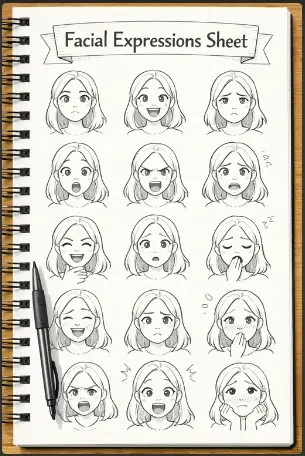
Draw one face multiple times on the same page. Keep the structure consistent, but change the expression each time. Focus on key areas like the eyes, eyebrows, and mouth.
Then exaggerate the features slightly to make the emotion clearer. This helps you understand what makes each expression readable. With practice, your characters will feel more expressive and engaging.
6. Perspective Drawing Practice
This idea builds your understanding of depth and space. It helps your drawings look more realistic and organized.
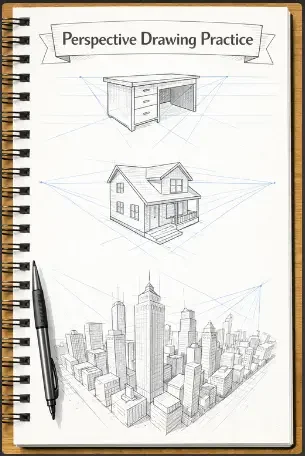
Start with one-point perspective. Draw a simple scene, like a road or a room with a clear vanishing point. Use light guidelines to keep everything aligned.
Once you feel comfortable, move to more complex setups like two-point perspective. This will challenge you but also improve your control. As you practice, your scenes will feel more solid and believable.
7. Doodle Pages
This idea helps you stay consistent by removing pressure. You focus on drawing freely without worrying about results.
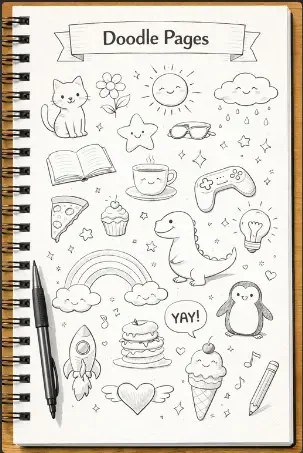
Fill a full page with random shapes, patterns, and small drawings. Do not plan anything. Let your hand move naturally and follow your ideas.
As you continue, you will notice patterns or ideas you can develop further. This makes doodling both relaxing and useful for creativity. It also helps you build a daily drawing habit.
8. Hands and Feet Studies
This idea targets areas that many artists struggle with. Practicing them regularly will improve your overall anatomy skills.
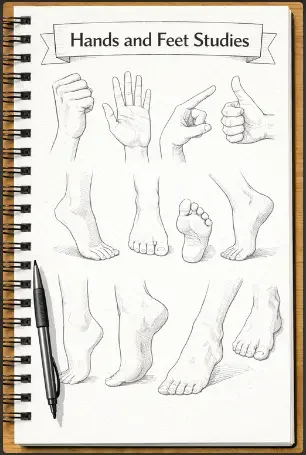
Use your own hand as a reference or find images online. Start by breaking the hand into simple shapes like blocks and cylinders. This makes the structure easier to understand.
Then add details slowly. Focus on different positions and angles. Repetition is key here. With time, these difficult forms will become easier to draw.
9. Outfit and Fashion Sketches
This idea helps you understand how clothing fits and moves on the body. It also improves your creativity.
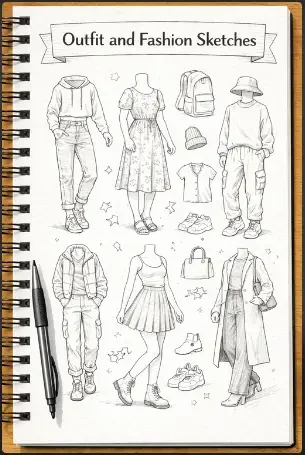
Start with a simple figure. Then draw different outfits on top of it. Focus on how fabric folds and reacts to movement.
Try different styles like casual, formal, or streetwear. This will expand your visual library. Over time, your drawings will feel more dynamic and detailed.
10. Redraw Old Sketches
This idea helps you measure progress and improve your past work. It shows you how your skills are developing.
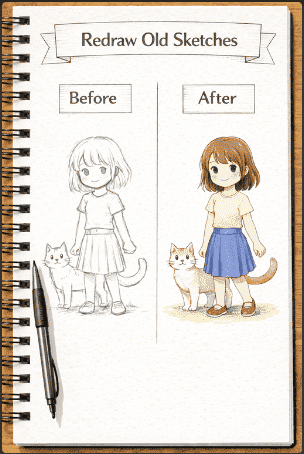
Pick an old drawing and redraw it on a new page. Focus on correcting proportions and improving details. Take your time and apply what you have learned.
Compare both versions after you finish. This gives you clear feedback and motivation. You will see progress practically.
11. Animal Sketches
This idea improves your understanding of different body structures. Animals give you variety and challenge your observation.
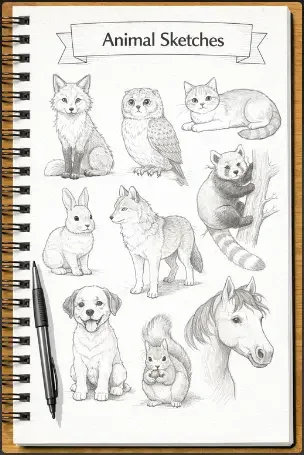
Choose one animal and study its shape. You need to start with simple forms to build the structure. Then refine details like fur and features.
Draw the same animal in different poses. This will help you understand movement and flexibility. With practice, your drawings will become more accurate.
12. Still Life Drawing
This idea improves composition and teaches you how objects interact in a scene. It builds both observation and planning skills.
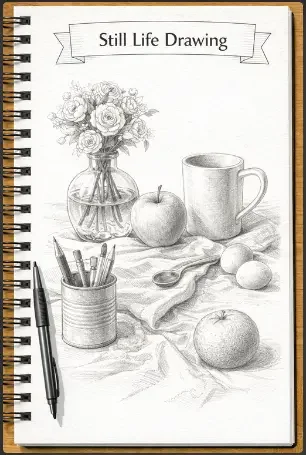
Arrange a few objects on a table. Make sure they overlap slightly to create depth. Then sketch the full setup.
Focus on proportions, spacing, and shadows. These elements will make your drawing look more balanced. Over time, your compositions will improve.
13. Fantasy Creatures
This idea pushes your creativity while still using real references. You combine known elements to create something new.
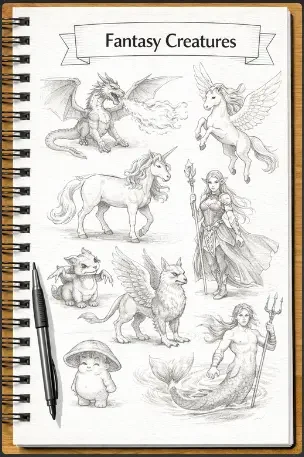
Start by choosing two or more animals. Break them into simple shapes, then combine their features into one design.
Keep the structure believable by following real anatomy. This will make your creature more convincing. With practice, your designs will feel original and strong.
14. Color Experiment Pages
This idea helps you understand how colors work together. It improves your control over color choices.
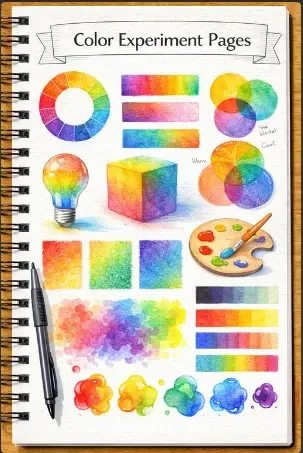
Pick a limited palette of three to five colors. Then create small sketches using only those colors. This forces you to think carefully.
Observe how colors interact with each other. Try different combinations and note what works. This will improve your color sense over time.
15. Storytelling Sketches
This idea helps you create drawings with meaning. You move beyond single objects and start building scenes.
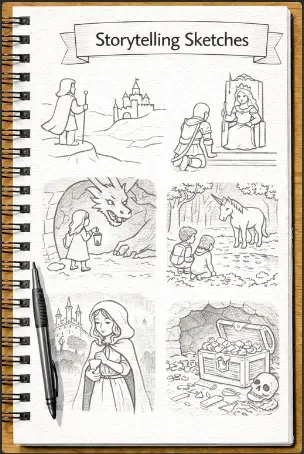
Think of a simple situation, like someone waiting or exploring. Then sketch a scene that shows that moment clearly.
Add small details to support the story. Focus on composition and clarity. This will make your drawings more engaging and easier to understand.
How to Stay Consistent with Your Sketchbook
Staying consistent matters more than drawing perfectly. You improve faster when you draw often, even if each session feels small. The goal is to remove friction so you show up regularly.
Set a simple schedule you can follow. For example, draw for 10 to 20 minutes each day. Keep your sketchbook visible so you remember to use it.
If you miss a day, continue the next day without trying to catch up.
Track your progress by dating your pages. When you look back after a few weeks, you will see clear improvement.
This builds motivation and makes the habit easier to maintain.
Related blog post: 13 Drawing Ideas for Beginners.
Sketchbook Tips for Beginners
Starting with the right approach will save you time and frustration. You do not need expensive tools or a perfect technique to improve.
Use simple materials like a basic sketchbook and pencil. This removes pressure and helps you focus on practice. If you worry about mistakes, you will draw less, so keep things simple.
Focus on quantity over perfection. Fill pages instead of trying to create one perfect drawing. Each page teaches you something new, even if the result is not ideal.
Accept mistakes as part of the process. Every artist goes through this stage. The more you draw, the faster you improve.
Conclusion
As you can see, you do not need more motivation. You need a clear starting point and a simple plan. These sketchbook ideas for drawings give you both.
Pick one idea from the list and start today. Keep your sessions short and consistent. Over time, your skills will improve, and your sketchbook will fill with better work.
More blog posts:
FAQs
Here are some frequently asked questions about sketchbook drawing ideas:
What should I draw in my sketchbook every day?
Focus on simple and repeatable ideas like everyday objects, quick gesture drawings, or facial expressions. These build strong fundamentals and do not require much setup. You can rotate between ideas to keep things interesting.
How many pages should I draw per day?
Start with one page per day. This keeps the habit manageable and consistent. If you have more time, you can add extra pages, but consistency matters more than volume.
Are sketchbook drawings supposed to look good?
No. A sketchbook is for practice, not perfection. Many pages will look rough, and that is normal. The goal is to improve over time, not create finished artwork.
How do I stay motivated to draw daily?
Make the process simple and reduce pressure. Keep sessions short and choose easy ideas. Tracking your progress also helps because you can see improvement over time.
What materials should I use for sketching?
Start with basic tools like a pencil and a simple sketchbook. You do not need expensive supplies. As you improve, you can experiment with pens, markers, or colors.
How long should a sketching session be?
Aim for 10 to 20 minutes per session. This is enough to build the habit without feeling overwhelmed. You can extend your sessions later once drawing becomes part of your routine.