15 Easy Drawing Ideas for Kids to Boost Creativity
There are a lot of easy drawing ideas for kids that can turn boredom into a fun and creative activity in minutes.
If your child keeps saying “I’m bored” or spends too much time on screens, a simple drawing idea can quickly grab their attention and keep them engaged. All you need is paper and a pencil to get started.
In this article, you will find 15 easy drawing ideas your child can try right away. Each idea is simple and fun.
These ideas help kids explore their imagination, practice basic shapes, and enjoy the process of creating without pressure. So let’s get started.
15 Easy Drawing Ideas for Kids
Before you get started, here are 15 simple drawing ideas your child can try right away. Each of these ideas focuses on fun and easy steps. You can pick one idea at a time or let your child choose what they like most.
1. Draw Your Favorite Animal
Ask your child to choose an animal they like, such as a cat, dog, lion, or elephant. You need to start by breaking the animal into simple shapes like circles for the head and ovals for the body.
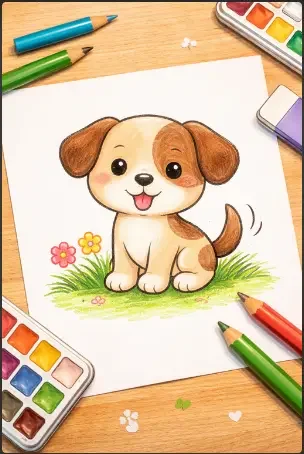
This approach helps kids understand structure without feeling overwhelmed. Encourage them to add details like eyes, fur patterns, or a tail.
You can also ask questions like “What is your animal doing?” to push them to add movement or a background. This idea builds observation skills and helps kids connect shapes to real objects.
To add more value, encourage your child to look at a real photo of the animal before drawing. This helps them notice small details like ear shape or leg position.
Over time, this practice improves accuracy and makes their drawings more recognizable without increasing difficulty.
Related blog post: 15 Easy Doodle Drawing Ideas for beginners.
2. Create a Cartoon Character
Kids enjoy drawing characters with big eyes, funny expressions, and unique features. Guide your child to start with a basic face shape, then add exaggerated elements like oversized eyes or a wide smile.
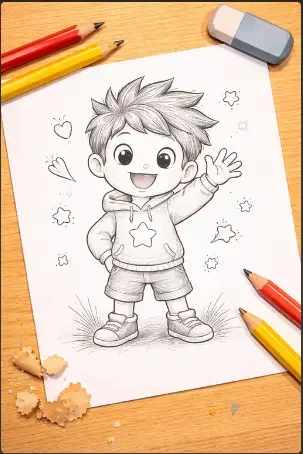
Let them decide the character’s personality, such as happy, sleepy, or mischievous. Ask them to name the character and describe what it likes to do. This turns drawing into storytelling and keeps them engaged longer.
In addition, suggest creating more than one version of the same character with different emotions. For example, the same character can look happy, angry, or surprised.
This helps your child understand facial expressions and improves their ability to communicate feelings through drawings.
3. Draw Your Dream House
This idea gives kids full creative freedom. Ask your child to design a house with anything they want, such as slides, pools, or secret rooms.
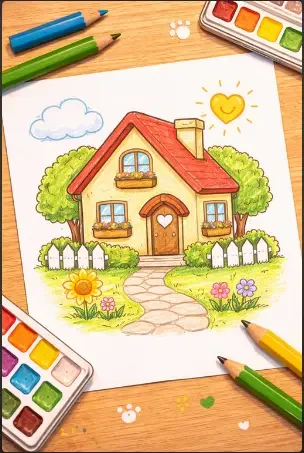
You can start with simple shapes like squares and triangles, then build on top with creative features. Encourage them to draw both the outside and the inside.
This activity improves spatial thinking and helps kids express their preferences and imagination.
You can take this further by asking your child to label different parts of the house. For example, they can write “bedroom” or “game room” next to each section.
This adds a learning element and helps connect drawing with basic planning and organization skills.
4. Underwater World Scene
Have your child draw an ocean scene with fish, seaweed, coral, and bubbles. Start with a few main elements, then add smaller details to fill the space.
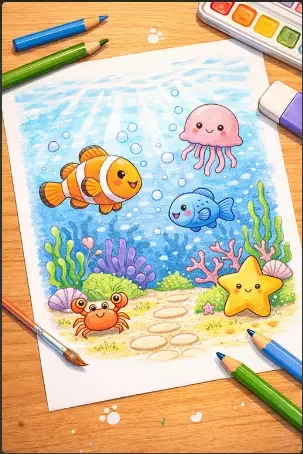
Show them how to use curved lines to create a sense of movement in water.
You can also suggest adding a treasure chest or a friendly sea creature to make the drawing more engaging. This idea helps kids learn how to build a full scene instead of a single object.
To improve the result, encourage your child to vary the sizes of the fish and objects. Bigger elements in the front and smaller ones in the background create depth.
This simple technique makes the drawing look more dynamic and visually interesting.
5. Design a Superhero
Ask your child to create their own superhero with a unique costume and special powers. You should start with a simple human figure, then add a cape, mask, or logo.
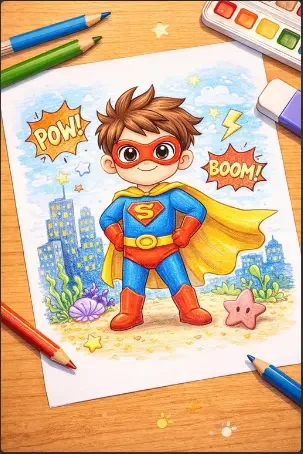
Encourage them to think about what their superhero can do and how they help others. This adds meaning to the drawing and keeps kids invested in the process. Drawing superheroes also helps kids simply practice body proportions.
To make this activity more engaging, ask your child to draw the superhero in action. For example, they can show the character flying or saving someone. This introduces movement and helps your child move beyond static drawings.
6. Draw a Magical Creature
Kids can combine features from different animals to create something new, such as a flying cat or a dragon with butterfly wings. Start with one main shape, then add imaginative elements step by step.
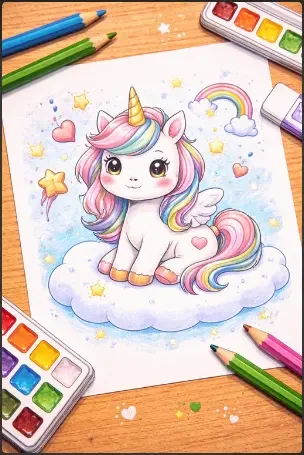
Encourage your child to choose colors and patterns that make the creature stand out. This activity strengthens creativity because there are no fixed rules to follow.
You can also ask your child to describe where the creature lives and what it eats. Then, they can add a small background that matches that environment. This builds a stronger connection between the character and its world.
7. Draw Your Family
Have your child draw family members using simple figures or cartoon styles. Focus on recognizable features like hair, glasses, or clothing.
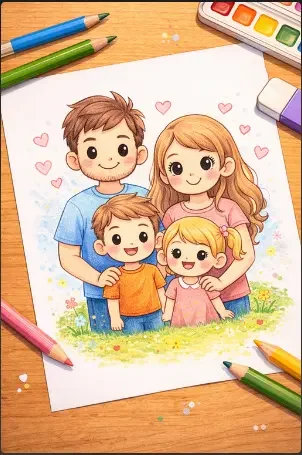
Ask them to include an activity, such as eating together or playing outside. This helps kids connect drawing with real life and emotions. It also gives them a chance to express how they see the people around them.
In addition, encourage your child to add names next to each person. This helps younger kids associate drawings with words. Over time, this supports both memory and early writing skills.

8. Create a Space Adventure
Ask your child to draw planets, stars, rockets, and aliens. Start with circles for planets and add rings or patterns to make each one unique.
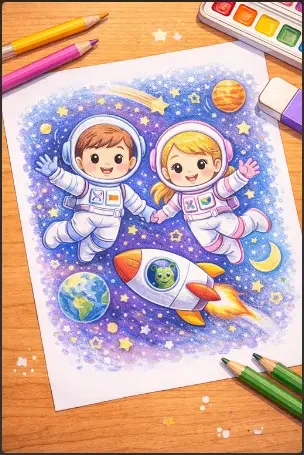
Encourage them to create a small story, such as a rocket landing on a new planet. This idea expands imagination and introduces basic composition as they place elements across the page.
To improve the drawing, suggest filling the empty space with stars or small details. This prevents large blank areas and makes the scene feel complete. It also teaches kids how to balance elements on the page.
9. Draw a Funny Monster
Give your child freedom to draw a silly monster with unusual shapes, extra eyes, or mismatched limbs. There are no rules, which reduces pressure and helps kids enjoy the process.
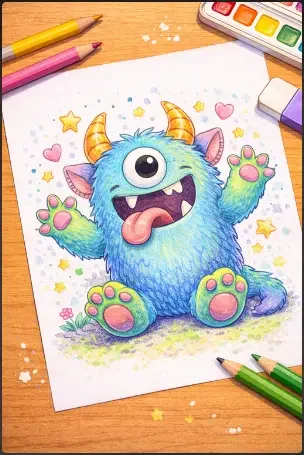
Encourage them to experiment with different expressions and textures. This activity supports creative risk-taking and builds confidence.
You can also turn this into a game by asking your child to roll a dice or pick random features. For example, “three eyes” or “long arms.” This adds variety and keeps the activity fresh each time.
10. Favorite Food Illustration
Ask your child to draw a favorite food, such as pizza, ice cream, or fruit. Start with basic shapes, then add toppings or details.
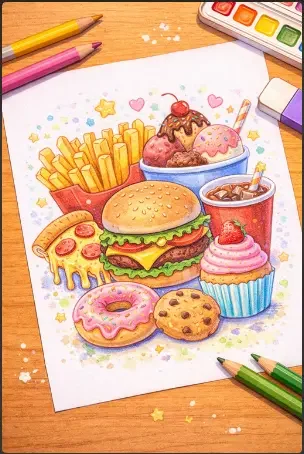
You can suggest adding a face to make the drawing more playful. This idea helps kids observe everyday objects and turn them into fun illustrations.
To go further, ask your child to draw more than one food item and create a small “menu.” This adds structure and encourages them to repeat shapes, which improves control and consistency.
11. Draw a Park Scene
Have your child create a park with trees, benches, swings, and people. Start with larger elements like trees, then fill in smaller details.
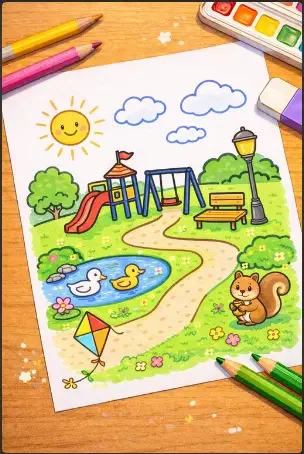
Teach them to place objects in different areas of the page to create depth. This helps kids understand how to organize a drawing and build a complete scene.
In addition, encourage your child to include actions, such as kids playing or people walking. This makes the drawing feel alive and helps them think about how different elements interact.
12. Weather Drawing
Ask your child to draw a type of weather, such as a sunny day, rain, or snow. Encourage them to show how the weather affects the environment, like puddles on the ground or clouds in the sky.
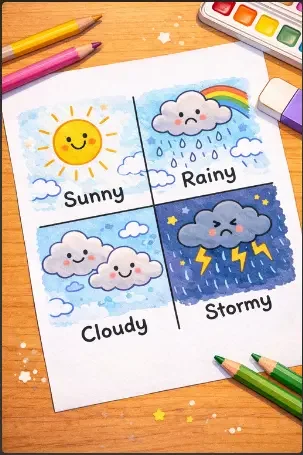
This idea helps kids connect drawing with real-world observations and improves their ability to represent movement.
To add more depth, ask your child to draw the same place in two different weather conditions.
For example, a park on a sunny day and the same park in the rain. This strengthens comparison skills and attention to detail.
13. Draw a Vehicle
Choose a vehicle like a car, bus, or airplane. Break it into simple shapes such as rectangles and circles. Once the basic form is complete, add details like windows, wheels, or wings.
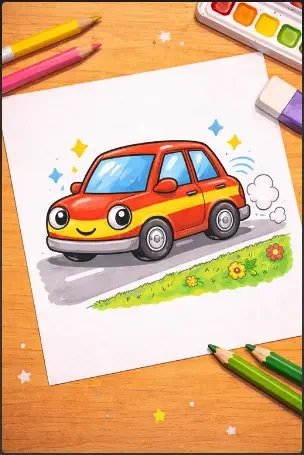
This activity helps kids understand how complex objects are built from simple forms.
You can also ask your child to draw the vehicle from a side view and then from a front view. This improves spatial awareness and helps them see how shapes change based on perspective.
14. Create a Comic Strip
Guide your child to divide the page into three or four panels. Ask them to draw a short story with a beginning, middle, and end.
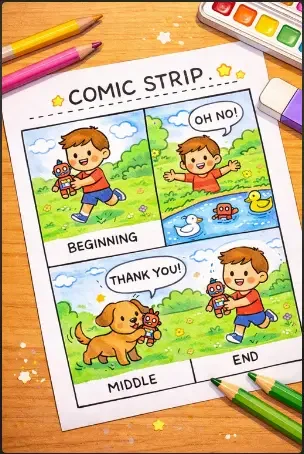
Keep the drawings simple and focus on clear actions. Adding short dialogue helps develop storytelling skills. This idea combines drawing with basic narrative structure.
To improve clarity, encourage your child to keep each panel focused on one action. This prevents confusion and makes the story easier to follow. It also teaches them how to organize ideas step by step.
15. Draw Your Favorite Story Scene
Ask your child to choose a scene from a book or movie they like. Encourage them to focus on one moment instead of the whole story.
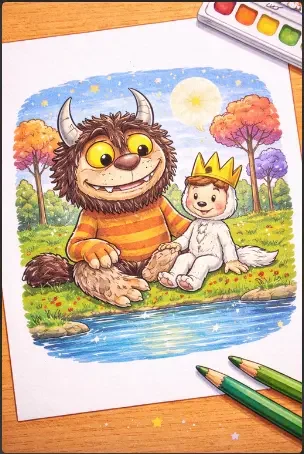
You can start with the main characters, then add background elements. This helps kids practice memory and interpretation while staying connected to something they enjoy.
You can also ask your child to explain why they chose that scene. This helps them reflect on their choices and builds a stronger connection between their thoughts and their drawings.
Why Drawing Is Important for Kids
Drawing helps your child build fine motor skills through simple actions like holding a pencil and controlling lines.
Over time, this improves hand strength and coordination, which supports writing and other daily tasks. Even short drawing sessions, around 10 to 15 minutes, create steady progress when done consistently.
Drawing also supports imagination and problem-solving. When your child decides what to draw and how to draw it, they practice making choices and thinking through ideas.
For example, deciding where to place objects on the page or how to draw a character in motion builds basic planning skills.
In addition, drawing gives your child a way to express thoughts and emotions. Many kids find it easier to draw how they feel instead of explaining it with words.
This helps you understand your child better and supports emotional development in a simple and natural way.
Related blog post: 15 Easy Cat Drawing Ideas for Beginners.
Tips to Encourage Kids to Draw More
Start by keeping drawing sessions short and consistent. A daily routine of 10 to 20 minutes works better than occasional long sessions. This helps your child build the habit without feeling tired or bored.
Create a simple and accessible drawing space. Keep paper, pencils, and crayons within reach so your child can start drawing without asking for help. The easier you make it, the more often your child will draw.
Avoid correcting every mistake. Focus on effort instead of results. When you praise your child, be specific. For example, say “I like how you added details to the background” instead of general praise.
This builds confidence and encourages improvement.
You can also join your child and draw together. When kids see you drawing, they feel more motivated to participate. This turns drawing into a shared activity and strengthens engagement over time.
Conclusion
Drawing ideas for kids gives you a simple way to support creativity, focus, and confidence at home. With the right approach, even basic drawings help your child improve important skills while having fun.
You can start with one idea from this list today and let your child take the lead. Over time, you will notice better creativity, stronger skills, and more interest in drawing without pressure or strict rules.
More blog posts:


FAQs About Kids Drawings
Here are some frequently asked questions:
At what age is it best to start drawing?
Kids can start drawing as early as age 2 or 3. At this stage, simple scribbles help develop hand control. As they grow, their drawings become more detailed and structured with practice.
How do I keep my child interested in drawing?
Rotate drawing ideas often and let your child choose what they want to draw. Giving them control keeps the activity fresh and reduces boredom. You can also introduce small challenges, such as drawing the same object in different ways.
Do kids need special materials to draw?
Basic tools like paper, pencils, and crayons are enough. Expensive materials are not required for progress. What matters most is regular practice and a positive environment.