13 Wall Art Ideas for a Work Office That Look Professional
Are you looking for wall art ideas for a work office? If so, you are in the right article, my friend.
Your workspace shapes how you think and work. If your walls feel empty or messy, your focus drops. A cluttered or blank space makes it harder to stay consistent. You need a setup that supports your work every day.
The fix is simple. You can use the right wall art to create structure, reduce distractions, and improve how your office looks.
Each piece should have a clear purpose. Some help you focus. Some keep you motivated. Some make your space look more professional.
You do not need a big budget or a full redesign. Small changes on your walls can make a clear difference in how you work.
In this article, I will give you 13 wall art ideas for a work office that you should try. These wall art ideas can make your work office look more professional and help you focus. So let’s get started.
Note: Some links in this article are affiliate links. If you buy a product using our link, we will get a small commission at no cost to you.
Wall Art Ideas for Work Office
The right wall art improves how your office looks and how you perform. You should choose pieces with intent, not random decor.
Focus on clarity, consistency, and purpose. The ideas below help you build a workspace that supports focus, reflects your goals, and looks professional in daily use.
1. Minimalist Line Art
Minimalist line art keeps your space clean and distraction-free. In addition to that, simple black lines on a white background create structure without pulling your attention away from your work.
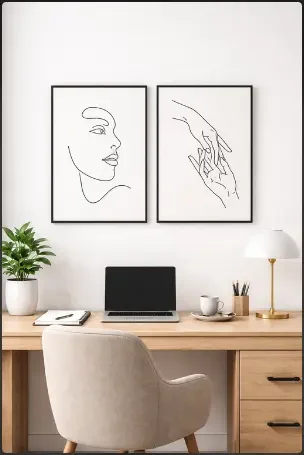
This works well if you spend long hours at your desk and need a calm visual environment.
You should place one or two pieces above your desk or slightly to the side. Keep frames consistent, use black or natural wood.
From experience, too many detailed artworks increase visual noise. Minimalist art solves this by giving you a refined look without clutter.
Best practices for minimalist line art:
Use black or white frames for consistency.
Limit to one or two pieces per wall.
Choose simple shapes or faces.
Related blog post: 13 Abstract Art Painting Ideas on Canvas.
2. Motivational Typography Prints
Motivational prints work best when they are short and direct. Also, long quotes reduce impact and become background noise over time.
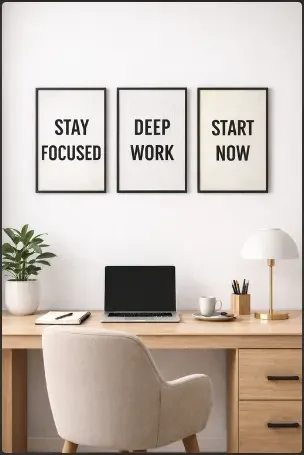
You should choose phrases with two to four words that push action, such as “Start Now” or “Stay Focused”.
Place these prints where your eyes land during breaks, not directly in front of your screen. This keeps them effective without distraction.
Many productivity setups use this method because it reinforces behavior without overwhelming your space.
Best practices for typography prints:
Use bold and easy-to-read fonts.
Keep text under five words.
Avoid bright or aggressive colors.
3. Neutral Abstract Canvas
Neutral abstract art helps you stay focused during long work sessions. Soft tones like beige, gray, and off-white reduce eye fatigue and create a balanced environment.
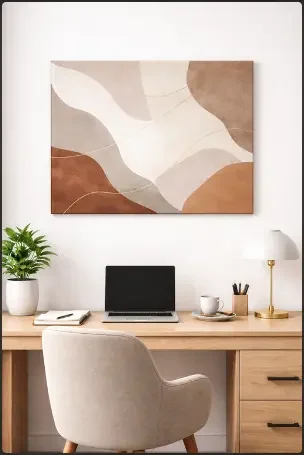
This is useful if you work in design, writing, or any task that requires deep focus.
You should use one larger canvas instead of several small pieces. Large artwork fills empty walls and avoids clutter.
From a design perspective, fewer but bigger elements create a stronger visual structure and make your office look more professional.
Best practices for abstract canvas art:
Choose soft, neutral tones.
Use one large piece per wall.
Avoid mixing too many styles.
4. Black and White Photography
Black and white photos add depth without introducing strong colors. This makes them ideal for maintaining focus while still adding personality to your office. Architecture, cityscapes, or nature shots work well.
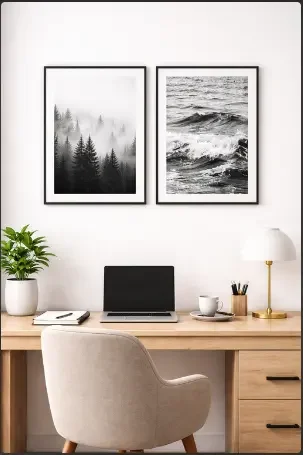
You should keep all frames consistent in size and color. A clean gallery wall on one side of your office creates balance. This approach is often used in professional offices because it looks structured and timeless.
Best practices for black and white photography:
Use identical frame styles.
Align photos evenly.
Stick to one theme, such as city or nature.
5. Vision Board Wall
A vision board keeps your goals visible and clear. When you see your targets daily, you stay aligned with your work. This is useful if you run a business, study, or work on long-term projects.
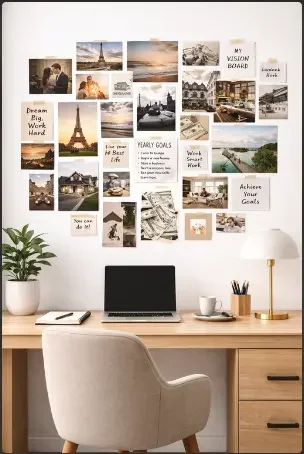
You should include images, short goals, and key milestones. Place it near your desk, but not directly in front of your screen.
Update it every few months to keep it relevant. This habit improves clarity and helps you stay consistent.
Best practices for vision boards:
Add clear and specific goals.
Use high-quality printed images.
Update every two to three months.
6. Grid Gallery Wall
A grid gallery wall creates order and symmetry. Using equal-sized frames in a structured layout makes your office look organized and intentional. This works well if you want a polished and professional setup.
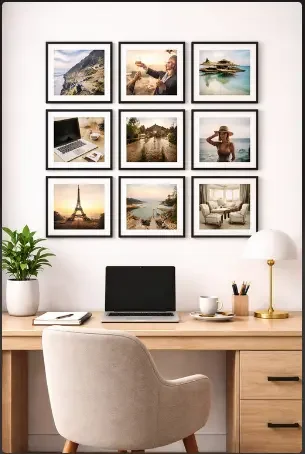
You should plan spacing before hanging anything. Keep an equal distance between frames and align everything properly.
Designers use grid layouts because they reduce visual chaos and make spaces feel controlled and balanced.
Best practices for grid gallery walls:
Use equal frame sizes.
Measure spacing before installation.
Keep alignment straight and clean.
7. Nature-Inspired Art
Nature visuals help reduce stress and improve focus. Studies in environmental psychology show that natural elements lower mental fatigue. Landscapes, plants, or ocean scenes are good options.
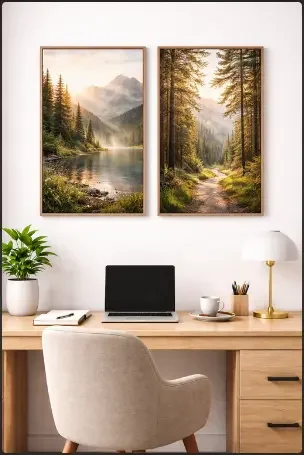
You should place these pieces where your eyes can rest during breaks. Use soft greens and blues for a calming effect. This is useful if you work long hours or deal with high cognitive load.
Best practices for nature art:
Choose calming colors like green and blue.
Avoid overly bright nature images.
Place opposite your screen.
8. Framed Certificates or Achievements
Displaying your achievements builds confidence and credibility. It also adds a professional touch, especially during video calls. This is useful if you work with clients or attend meetings online.
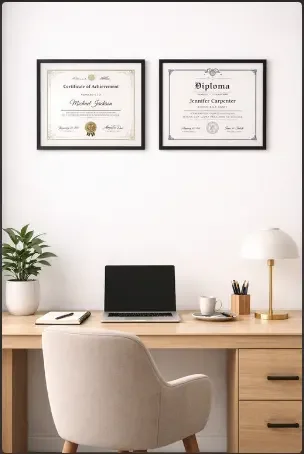
You should limit the number of frames to avoid clutter. Three to five pieces are enough. Place them in your camera background so they support your professional image without dominating the space.
Best practices for certificates and awards:
Limit to key achievements only.
Use clean, simple frames.
Keep spacing consistent.
9. Digital Art Prints
Digital prints give you access to a wide range of styles at a low cost. You can download high-quality designs and print them locally. This allows you to refresh your office without spending a lot.
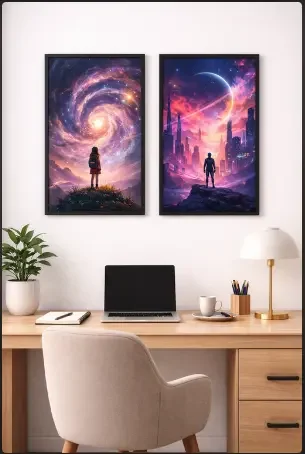
You should choose designs that match your color scheme. Consistency matters more than variety. Many professionals use digital prints because they are flexible and easy to update.
Best practices for digital prints:
Match colors with your office theme.
Print on high-quality paper.
Replace prints when needed.
10. Whiteboard or Chalkboard Wall
A whiteboard or chalkboard adds both function and visual structure. You can use it to plan tasks, sketch ideas, or track progress. This turns your wall into an active workspace.
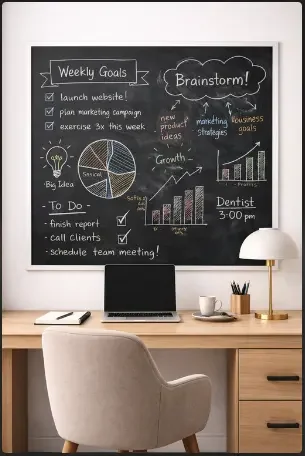
You should keep it clean and update it daily. Avoid overcrowding it with too much information.
This method works well for people who manage projects or need to visualize ideas regularly.
Best practices for whiteboard walls:
Clean and reset daily.
Focus on key tasks only.
Use clear sections for organization.
11. Color Psychology Art
Colors influence how you feel and work. Blue supports focus, green promotes calm, and yellow boosts creativity. You should choose colors based on your type of work.
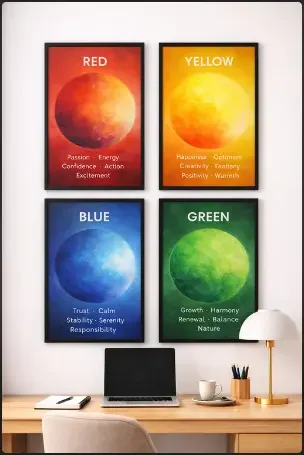
Use one dominant color to avoid visual overload. For example, use blue tones if you need deep focus. This approach is backed by design principles used in office environments to improve performance.
Best practices for color-based art:
Choose one main color.
Avoid mixing too many tones.
Match color with your work style.
12. Industry-Specific Artwork
Artwork related to your field keeps you connected to your work. Designers can use sketches or layouts. Developers can use system diagrams. This reinforces your identity and keeps your mindset aligned.
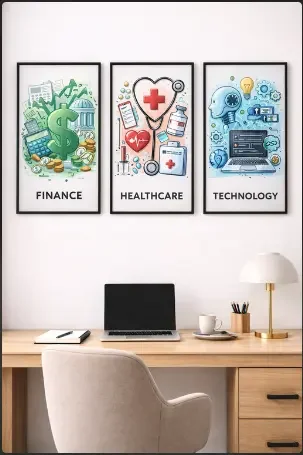
You should rotate pieces over time to avoid visual fatigue. This keeps your space fresh and engaging. Many professionals use this strategy to stay inspired without changing their entire setup.
Best practices for industry artwork:
Choose visuals related to your field.
Rotate artwork every few months.
Keep designs clean and relevant.
Related blog post: 17 Wall Painting Ideas for Every Room.
13. Personalized Name or Brand Sign
A custom name or logo sign adds identity to your workspace. It makes your office look intentional and professional, especially in video calls or content creation setups.
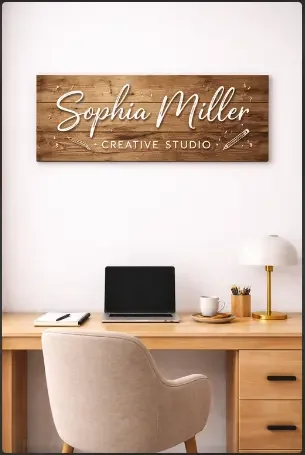
You should keep the design simple. Use neutral colors and clean fonts. Place it behind your chair for visibility.
This small addition strengthens your personal brand and improves how others perceive your workspace.
Best practices for personalized signs:
Use simple and readable fonts.
Keep colors neutral.
Place in your camera background.
Conclusion
Your office walls affect how you feel and work each day. The right wall art helps you stay focused and motivated. Start simple. Choose one style and stick to it. Use colors that match your desk and space.
You do not need to fill every wall. One strong piece or a clean layout works better than clutter. Keep spacing even and designs consistent.
You can get great results on a low budget. Printable art and simple frames look clean and modern. Focus on placement and quality, not quantity.
You can try different ideas and adjust over time. Your goal is a space that helps you work better every day.
More blog posts:
FAQs
Here are some frequently asked questions about wall art ideas for a work office:
What is the best wall art for a work office?
The best wall art depends on how you work each day. If you need focus, choose simple prints with soft colors. If your work needs energy or creativity, choose bold abstract art or strong color contrasts. Many people also use a motivational quote near their desk to stay focused on their goals.
How do I choose wall art for my office?
Start by choosing one clear theme, such as minimal, modern, or creative. Then match your wall art with your furniture and desk colors. Keep your layout simple and avoid adding too many pieces. A clean design helps you stay focused and makes your office look more professional.
What colors are best for office wall art?
Neutral colors like white, beige, and gray help reduce distractions and improve focus. Blue helps you stay calm and concentrated. Yellow adds energy but should be used in small amounts. Stick to one main color and one accent color to keep the design balanced.
How can I decorate my office walls on a budget?
You can print high-quality artwork online and place it in simple frames. You can also create your own designs or use free printable art. Another option is a small gallery wall with 3 to 5 prints. This gives your office a clean and stylish look without spending much money.
Should I use quotes on my office wall?
Yes, quotes can help you stay motivated, but keep it simple. One or two strong quotes work better than many. Place them where you can see them easily while working, such as above your desk or next to your screen.
What size wall art should I use?
Large wall art works best for empty walls because it creates a strong visual focus. Medium or small prints work better for tight spaces or gallery layouts. Always check the wall size before choosing your artwork so everything stays balanced.
How do I arrange wall art?
Place your artwork at eye level so it feels natural to look at. Keep equal spacing between each piece to create a clean layout. You can use a grid style for a modern look or one large piece as a focal point.
Does wall art help productivity?
Yes. A clean and well-designed office can improve focus and reduce stress. Studies show that visual elements like color and design affect mood and performance. The right wall art helps create a space where you feel comfortable and ready to work.
Can I mix different wall art styles?
Yes, but you need a clear structure. Use the same color palette or frame style to keep everything consistent. This helps your office look organized instead of messy.
What wall art is popular for offices?
Minimal prints, abstract art, typography posters, and nature-inspired designs are popular choices. These styles look modern and help create a calm and productive work environment.