9 Art Therapy Activities for Adults
Art therapy activities help you handle stress in a simple and practical way. Instead of keeping everything inside, you put your thoughts and feelings on paper.
When you draw or paint what you feel, you slow down your mind. As a result, you start to understand yourself better.
As an adult, you deal with pressure almost every day. Work, money, relationships, and responsibilities add up. Over time, this pressure affects your mood and energy.
So you need healthy ways to release it. Art gives you that outlet. You do not need talent or experience. You only need basic supplies and a few quiet minutes.
In this article, you will find 9 easy art therapy activities designed for adults. These art therapy painting ideas and mental health art ideas help you reduce stress, improve emotional awareness, and build a simple self-care routine.
What Are Art Therapy Activities
Art therapy activities are creative exercises that help you express and process your emotions through art. You use drawing, painting, or coloring to explore what you feel. The goal is not to create perfect artwork. The goal is to understand yourself better.
Therapists often use similar techniques to support adults dealing with stress, anxiety, and burnout. Research shows that creative expression helps reduce stress levels and improve emotional awareness.
When you focus on colors and shapes, your mind slows down. As a result, you feel more grounded.
Art therapy activities are different from regular art hobbies because they focus on intention. You create with a purpose.
For example:
You draw your current emotions instead of random objects.
You paint a safe place to reduce anxiety.
You track your mood with colors to notice patterns.
In short, these exercises turn art into a tool for mental health. You focus on the process. Then you reflect on what your artwork reveals about your thoughts and feelings.
Related blog post: How to Draw Lips Step By Step?
9 Art Therapy Activities for Adults
These 9 art therapy activities for adults help you express your emotions in a clear and practical way. Each one has a simple goal, such as reducing stress or improving self-awareness.
1. Emotion Color Wheel
The emotion color wheel helps you identify and name what you feel with more precision.
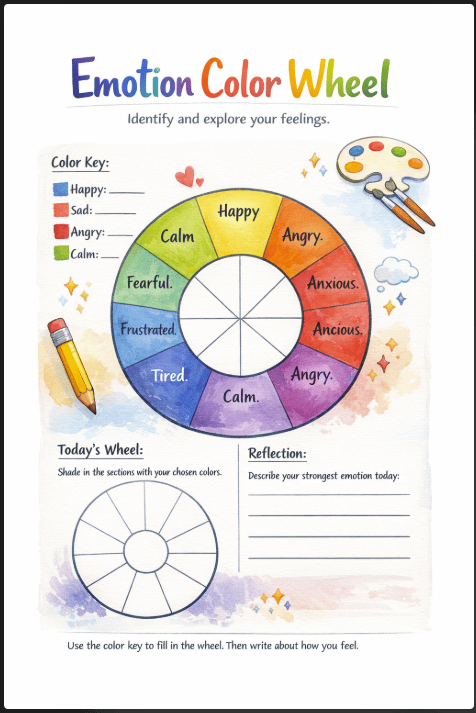
Many adults describe their state as “stressed” or “tired,” but those words often hide deeper emotions like frustration, fear, or disappointment.
When you match specific emotions to colors, you make your inner state visible.
What to do:
Use a printable emotion wheel with different feeling categories.
Assign a color to each emotion.
Shade the sections based on what you feel today.
Write one short reflection about the strongest emotion.
This exercise builds emotional vocabulary. As you practice, you improve your ability to recognize patterns in your mood and respond more intentionally.
Related blog post: 15 Easy Flower Drawings for Beginners.
2. Safe Place Painting
Safe place painting is one of the most practical art therapy painting ideas for adults who struggle with anxiety.
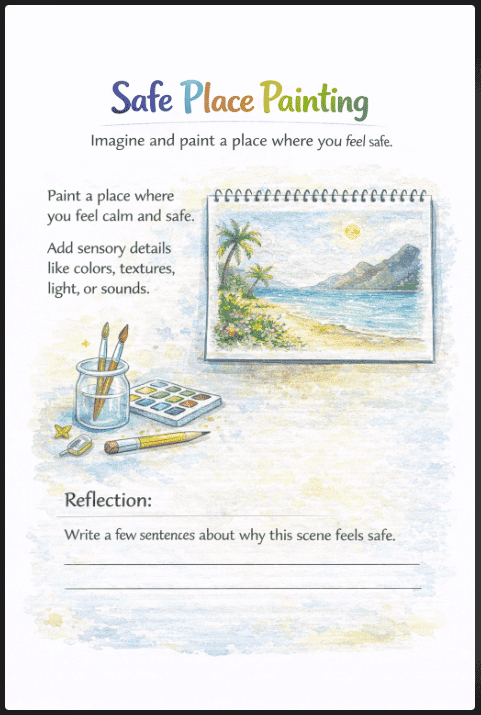
You create a visual scene where you feel calm, supported, and protected. The focus on safety helps your brain shift away from threat and toward stability.
What to do:
Paint or draw a place where you feel completely at ease.
Add sensory details like colors, textures, light, or sounds.
Write a few sentences explaining why this place feels safe.
When you return to this image later, you reinforce a sense of control. Over time, this practice strengthens your ability to calm yourself during stressful moments.
3. Anxiety Release Scribble
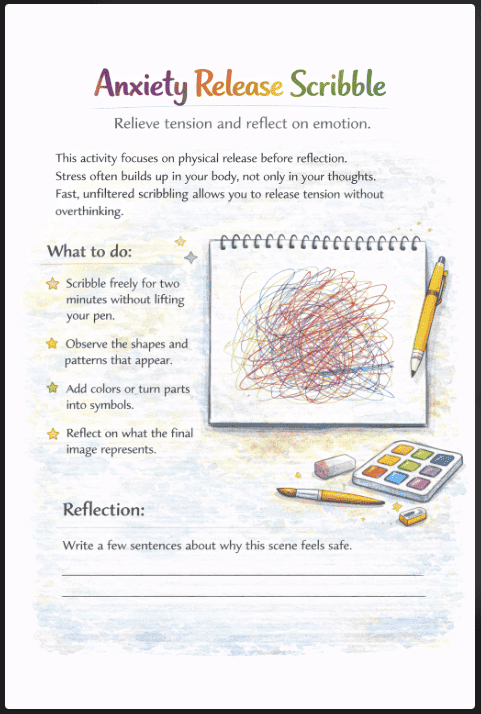
This activity focuses on physical release before reflection. Stress often builds up in your body, not only in your thoughts. Fast, unfiltered scribbling allows you to release tension without overthinking.
What to do:
Scribble freely for two minutes without lifting your pen.
Observe the shapes and patterns that appear.
Add colors or turn parts into symbols.
Reflect on what the final image represents.
The movement reduces tension. The reflection helps you process what triggered it. This combination makes the exercise both active and insightful.
4. Self Portrait With Feelings
A self-portrait with feelings encourages honest self-observation. Instead of drawing a realistic face, you focus on emotional symbols. This helps you explore how you see yourself internally.
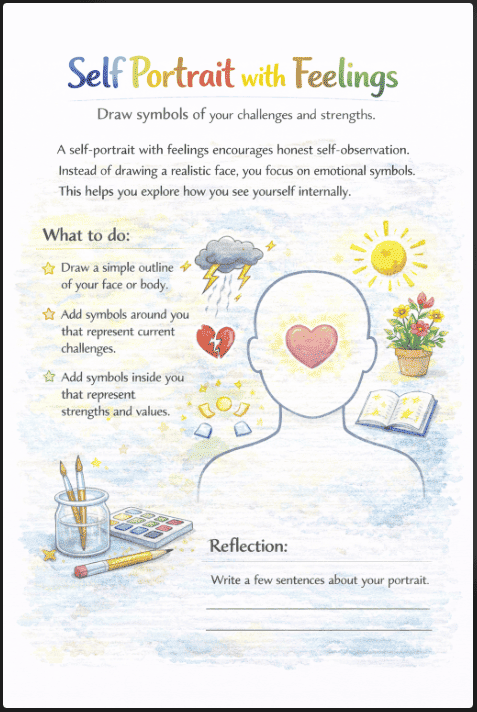
What to do:
Draw a simple outline of your face or body.
Add symbols around you that represent current challenges.
Add symbols inside you that represent strengths and values.
By placing strengths and struggles in the same image, you build perspective. You start to see that difficulties exist, but they do not define your whole identity.
5. Gratitude Art Page
Gratitude art shifts your focus from pressure to support. When you visually represent what you appreciate, you reinforce positive emotional pathways in your brain.
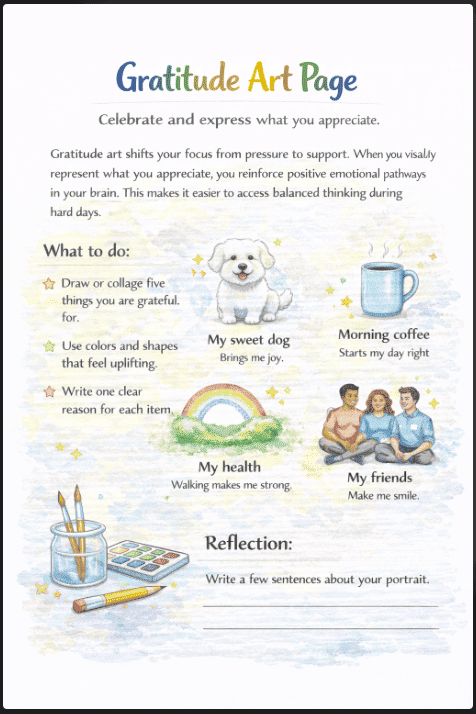
This makes it easier to access balanced thinking during hard days.
What to do:
Draw or collage five things you are grateful for.
Use colors and shapes that feel uplifting.
Write one clear reason for each item.
This mental health art idea works best when repeated weekly. Consistency strengthens the impact and helps you maintain emotional balance.
6. Paint Your Stress
Painting your stress allows you to externalize what feels overwhelming. Instead of keeping stress abstract, you give it a shape, size, and color. This makes it easier to confront and transform.
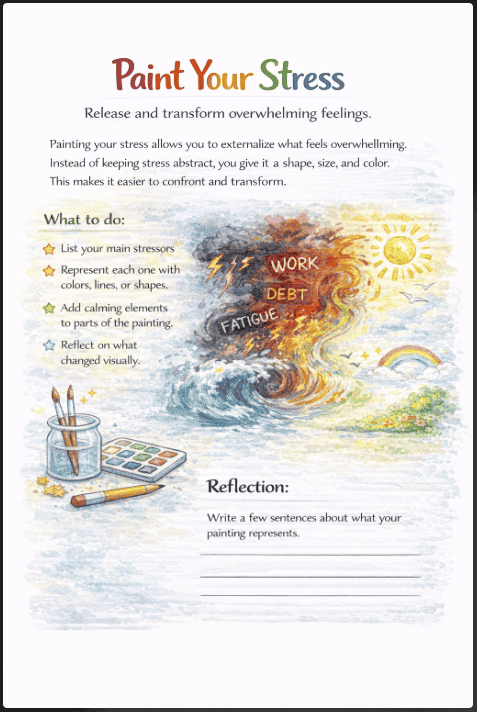
What to do:
List your main stressors.
Represent each one with colors, lines, or shapes.
Add calming elements to parts of the painting.
Reflect on what changed visually.
When stress moves from your mind onto paper, you gain psychological distance. That distance improves clarity and problem-solving.
7. Affirmation Art Cards
Affirmation art cards combine visual creativity with positive self-talk. When you design your own cards, you personalize the message. This increases emotional impact compared to generic quotes.
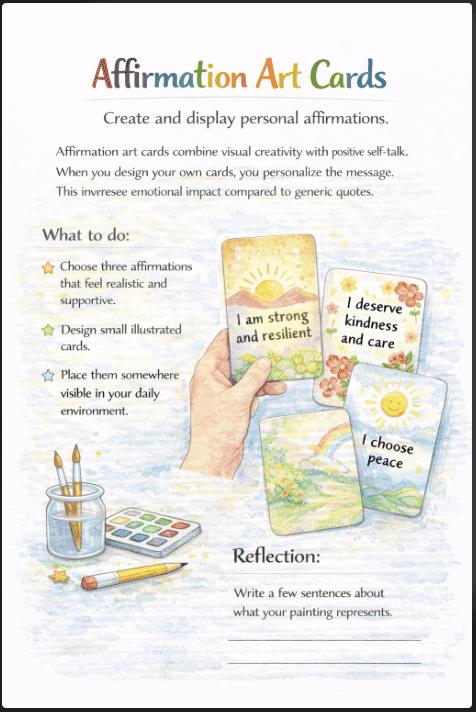
What to do:
Choose three affirmations that feel realistic and supportive.
Design small illustrated cards.
Place them somewhere visible in your daily environment.
Seeing your own artwork daily reinforces the message. Over time, repetition helps reshape negative thought patterns.
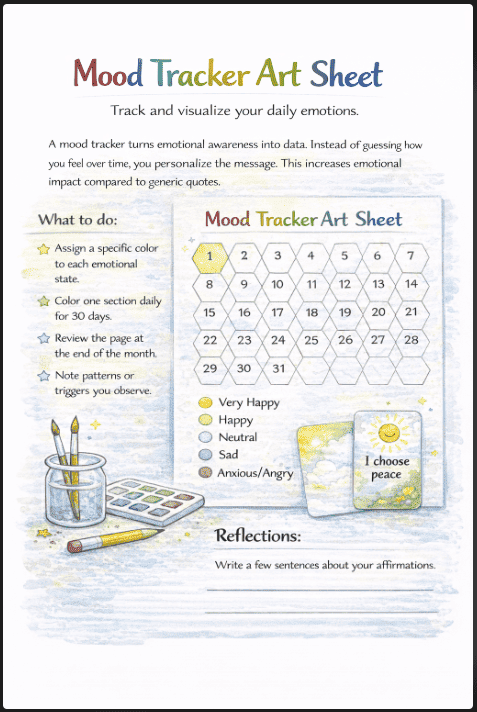
8. Mood Tracker Art Sheet
A mood tracker turns emotional awareness into data. Instead of guessing how you feel over time, you record it visually. Patterns become clear after several weeks.
What to do:
Assign a specific color to each emotional state.
Color one section daily for 30 days.
Review the page at the end of the month.
Note patterns or triggers you observe.
This structured approach supports accountability. It also helps you connect lifestyle habits with emotional changes.
9. Letting Go Art Exercise
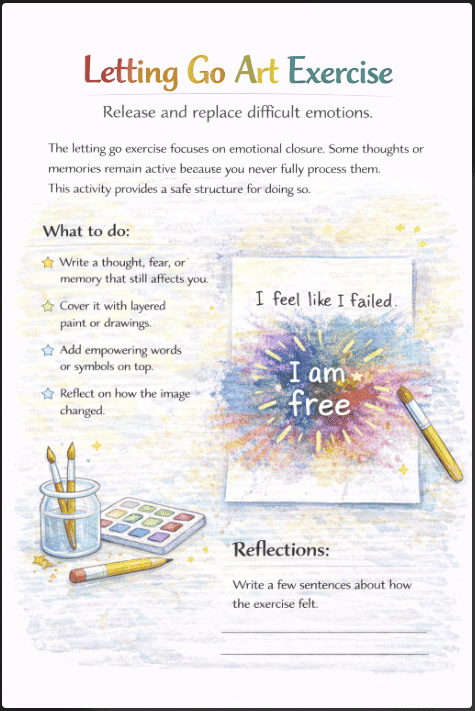
The letting go exercise focuses on emotional closure. Some thoughts or memories remain active because you never fully process them. This activity provides a safe structure for doing so.
What to do:
Write a thought, fear, or memory that still affects you.
Cover it with layered paint or drawings.
Add empowering words or symbols on top.
Reflect on how the image changed.
The physical act of covering and transforming the words creates symbolic release. You move from holding the experience to reshaping its meaning.
How Art Therapy Activities Support Mental Health
Art therapy activities support mental health because they give you a structured way to process emotions instead of suppressing them.
When you draw, paint, or color with intention, you shift from overthinking to active expression. This shift helps your brain slow down and organize thoughts more clearly.
Here is how art therapy helps with your mental health:
Stress reduction: Creative movement lowers tension, slows your breathing, and helps your body relax. Even 20 minutes of focused art reduces daily stress.
Emotional regulation: Putting feelings on paper makes them easier to manage. You gain distance from intense reactions and build better control.
Increased self-awareness: Reflection helps you notice mood patterns and triggers. This improves daily decisions and communication.
Encourage regular practice: Consistent short sessions strengthen emotional resilience more than occasional long sessions.
When you practice these activities consistently, you support your mental health practically. Small creative sessions each week help you reduce stress, manage emotions, and understand yourself better over time.
Conclusion
Art therapy activities help you reduce stress, process emotions, and improve focus. By practicing these exercises regularly, you build self-awareness and strengthen emotional resilience.
You can start with one activity, set aside 20 minutes, and focus on the process instead of the result.
Over time, consistent practice creates lasting mental clarity. So choose the activities that fit your needs, commit to them weekly, and use creativity as a practical tool to support your well-being.
More blog posts:
Frequently Asked Questions
Here are some FAQs about art therapy activities:
Do art therapy activities really help with stress?
Yes. Research in psychology shows that creative expression lowers stress levels and helps regulate your nervous system. When you focus on art, your breathing slows, and your body relaxes. Many adults use art therapy activities as a simple weekly tool to manage daily pressure.
Do I need to be good at drawing or painting?
No. Art therapy activities focus on the process, not the final result. You do not need talent or experience. Simple shapes, colors, and symbols work well. What matters most is honesty and reflection.
How often should I practice art therapy activities?
You get better results with consistency. Try one or two sessions per week for 20 to 30 minutes. Regular short sessions help you build emotional awareness and resilience over time.
Can I do art therapy activities at home?
Yes. You can practice art therapy activities at home with basic supplies like paper, pencils, or paint. Many adults prefer printable worksheets because they provide structure and clear prompts.
What are some simple art therapy painting ideas for beginners?
Safe place painting, painting your stress, and emotion color wheels are great starting points. These art therapy painting ideas give you clear instructions and help you focus on emotional expression instead of technique.
Are mental health art ideas the same as professional therapy?
Mental health art ideas support emotional well-being, but they do not replace licensed therapy. If you struggle with severe anxiety, depression, or trauma, speak with a qualified mental health professional.
You can still use art therapy activities as a supportive tool alongside treatment.