15 Easy Doodle Drawing Ideas for Beginners
Easy doodle drawing ideas for beginners offer one of the fastest ways to start drawing without stress or pressure.
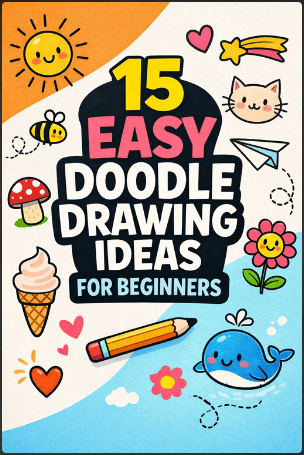
Many people want to draw but stop before they begin because they think drawing needs talent or years of practice. Doodling removes that barrier and gives you a simple place to start.
A doodle uses basic shapes such as circles, lines, and curves. Because of this, you do not need advanced skills or expensive tools.
A pen, a pencil, and a piece of paper give you everything you need. As you practice small drawings, your hand control improves, and drawing starts to feel natural.
In addition, doodling helps you build confidence. Each small drawing takes only a few minutes, so you see progress quickly. For beginners, this quick feedback keeps motivation high and turns drawing into a daily habit.
This article shows fifteen simple doodle ideas that beginners can start drawing today. Each idea uses basic shapes and clear steps, so you follow along with ease and fill pages with fun sketches in a short time.
Easy Doodle Drawing Ideas for Beginners
Easy doodle drawing ideas for beginners help you start drawing with simple shapes and quick sketches. Each idea uses basic lines, circles, and curves, so beginners follow along without difficulty.
You can start with one doodle, practice a few times, and your drawing skills improve step by step.
Here are some doodle drawing Ideas:
1. Flower Doodle
A flower doodle stands among the easiest starting points for beginners. You will need to start with a small circle in the center. Next, draw simple oval or round petals around the circle.
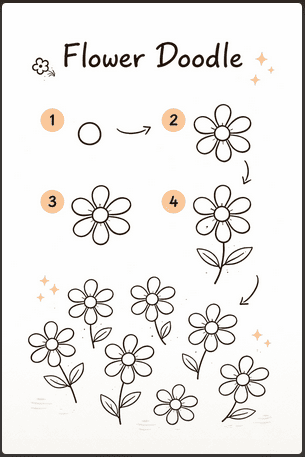
Keep the shapes loose and uneven because doodles look better with small imperfections.
After the basic flower shape, add details such as small lines inside the petals or a simple stem with two leaves. Repeating this doodle across the page helps improve hand control.
Many beginners fill sketchbook pages with flowers because each version looks different while using the same basic structure.
Related blog post: 15 Easy Flower Drawings for Beginners.
2. Leaf and Branch Doodle
A leaf doodle teaches line control and symmetry. Begin with a single curved line to form the branch. Then add small leaves along the branch using almond-shaped forms.
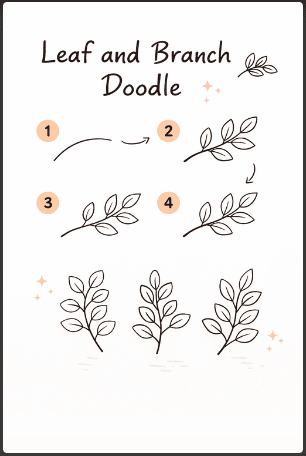
Next, draw a line through the center of each leaf. This line represents the vein and gives the doodle more structure.
As you repeat this exercise, try drawing different leaf shapes, such as round and long leaves, or slightly curved leaves. This practice builds observation skills and improves drawing consistency.
3. Cute Mushroom Doodle
Mushrooms create playful doodles and require only a few shapes. You need to start with a half-circle shape for the mushroom cap. Then draw a short rectangle or curved stem underneath.
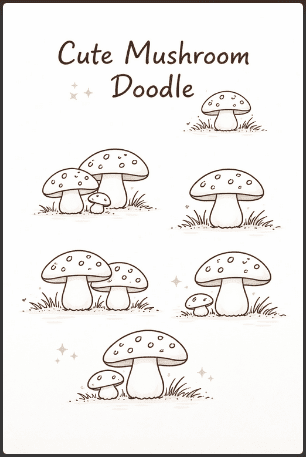
After the base shape, add small circles on the cap to represent spots. You can also draw tiny grass lines at the bottom to place the mushroom in a simple environment.
Many beginner artists enjoy mushroom doodles because they combine simple shapes with character and personality.
4. Smiley Face Doodle
A smiley face doodle helps beginners practice drawing circles and facial expressions. Begin with a simple circle. Then draw two small dots or circles for the eyes.
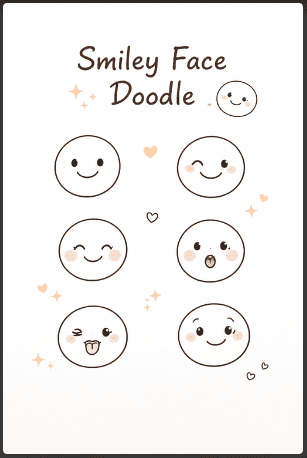
Next, add a curved line for the smile. After the basic face, experiment with different expressions such as surprised eyes, closed eyes, or playful eyebrows.
This simple exercise improves facial drawing skills and helps you understand how small changes affect expression.
5. Simple Heart Doodle
A heart doodle builds control over curved lines. Start by drawing two small curves that meet at the top. Then connect them into a point at the bottom.
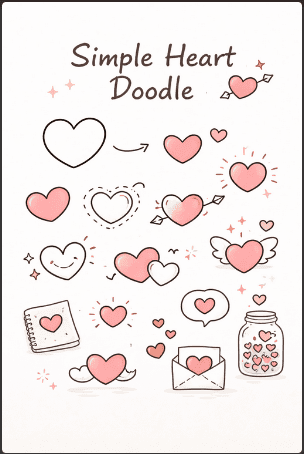
Once you draw the basic heart, decorate it with patterns such as dots, stripes, or small sparkles. Repeating hearts across a page also works well as a warm-up exercise before longer drawing sessions.
6. Cloud and Raindrop Doodle
Cloud doodles use soft, rounded shapes. Begin by drawing a loose cluster of small bumps to form the cloud outline. Avoid straight lines because clouds look better with uneven curves.
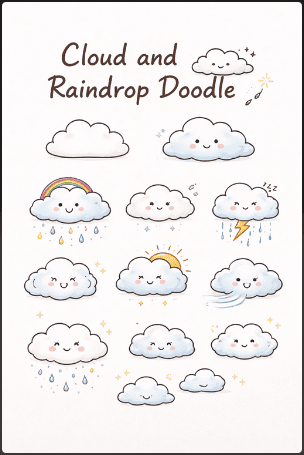
Next, draw small raindrop shapes falling below the cloud. Each raindrop uses a simple teardrop shape. This doodle teaches spacing and rhythm since the raindrops should spread evenly under the cloud.
7. Star and Moon Doodle
A star and moon doodle helps beginners practice clean lines and symmetry. You need to start with a crescent moon shape using two curved lines. Then draw small stars around the moon.
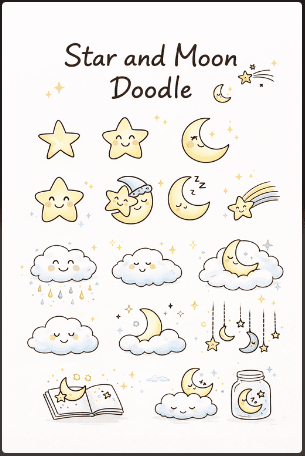
For the stars, use simple four-point or five-point shapes. You can also add small dots between the stars to create a night sky effect. This type of doodle works well as a background pattern in journals and sketchbooks.
8. Tiny House Doodle
A tiny house doodle introduces simple perspective. Begin with a square or rectangle for the house base. Then add a triangle on top for the roof.
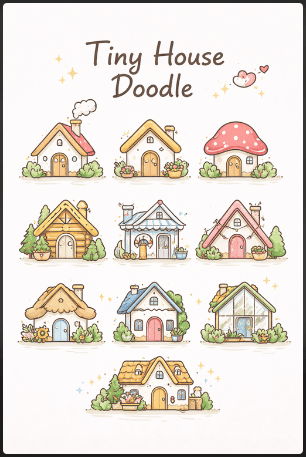
Next, draw a small door and two windows. You can also add smoke from a chimney or a few trees nearby. This doodle helps beginners learn how shapes combine to form simple scenes.
9. Coffee Cup Doodle
A coffee cup doodle teaches curved shapes and proportions. Start with a rounded rectangle for the cup body. Then draw a curved handle on one side.

After the cup shape, add steam lines rising from the top. These lines suggest hot coffee and bring movement to the drawing. Many artists also add small hearts or swirls in the steam to give the doodle personality.
10. Cactus in a Pot Doodle
A cactus doodle uses basic shapes and repeating details. You can begin with a small pot using a trapezoid shape. Then draw a tall oval or rounded column for the cactus body.
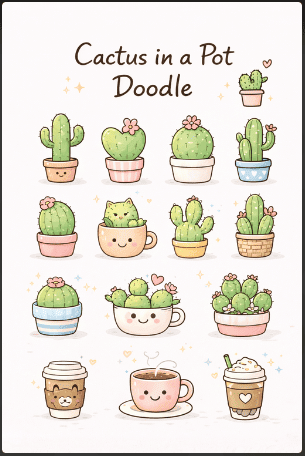
Add two smaller cactus arms on each side. Afterward, draw small and short lines across the cactus to represent spikes. This doodle helps beginners practice texture and repetition.
11. Butterfly Doodle
A butterfly doodle helps beginners understand symmetry. You need to start with a thin vertical oval for the body. Then draw two large wings on each side.
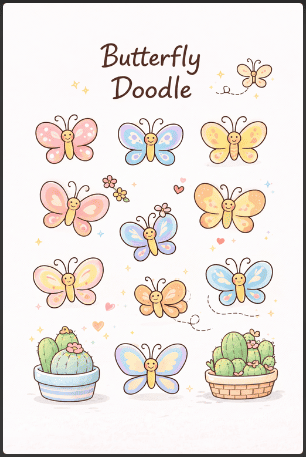
Try to keep the wings balanced in size and shape. After drawing the wings, add patterns such as dots, stripes, or curved shapes inside the wings. These details improve design awareness and pattern creation.
12. Cute Cat Face Doodle
A cat face doodle introduces simple character drawing. Begin with a circle for the head. Then draw two small triangles on top for the ears.
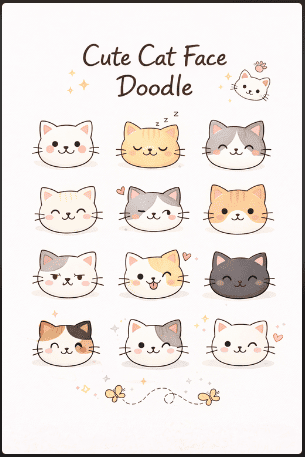
Next, add two round eyes, a small triangle nose, and a curved mouth. Finally, draw three whisker lines on each side. This doodle helps beginners understand facial proportions and expression.
13. Sun Doodle
A sun doodle works well as a quick warm-up drawing. You will need to start with a simple circle in the center of the page. Then draw straight or slightly curved rays around the circle.
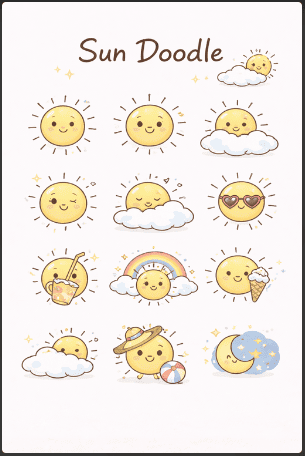
You can vary the rays by alternating long and short lines. Adding a small smiling face inside the sun also gives the doodle personality. This exercise improves radial symmetry and spacing.
14. Ice Cream Cone Doodle
An ice cream cone doodle combines geometric shapes and texture. Make sure to begin with a triangle pointing downward for the cone. Then draw a large and rounded scoop on top.

After the scoop, add a crisscross pattern inside the cone to represent the waffle texture. You can also add sprinkles or a second scoop to make the doodle more playful.
15. Simple Mountain Landscape Doodle
A mountain landscape doodle helps beginners draw simple scenery. You can start with two or three triangle shapes to represent mountains. Place the tallest mountain in the center.
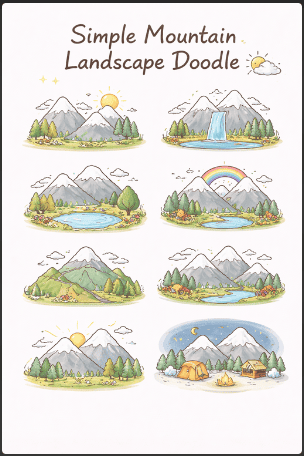
Next, draw a small sun or clouds above the mountains. Add a few short lines near the base to suggest trees or grass. This doodle teaches composition and shows how basic shapes create small landscapes.
Supplies You Need to Start Doodling
You need only a few basic tools to begin doodling. These simple supplies help you focus on practice and improve drawing skills.
• Pencil: A standard HB pencil works well for beginners. Light sketch lines help you adjust shapes before outlining.
• Black pen or fineliner: A 0.3 mm or 0.5 mm fineliner creates clean outlines and improves line confidence.
• Sketchbook or notebook: A small sketchbook supports daily practice and keeps all doodles in one place.
• Eraser: A soft eraser removes extra sketch lines and helps correct shapes during practice.
• Markers or colored pens: Simple colors add contrast and make doodles more visually appealing.
Start with these simple tools. Focus on drawing often instead of collecting many supplies.
Common Mistakes Beginners Make With Doodles
Many beginners repeat a few common mistakes. Recognizing them helps you improve faster.
Here are some mistakes that you should avoid:
• Pressing the pencil too hard: Heavy pressure makes lines difficult to erase. Light strokes keep drawings flexible.
• Trying to make every doodle perfect: Doodles look better with loose lines and small imperfections.
• Skipping basic shapes: Circles, triangles, and rectangles create the structure of most doodles.
• Drawing too large: Small doodles help beginners control proportions and line accuracy.
• Practicing too rarely: Short daily practice sessions build stronger drawing habits.
Frequently Asked Questions About Doodle Drawing Ideas
Here are some FAQs:
What is the easiest doodle for beginners?
A smiley face stands among the easiest doodles for beginners. The drawing uses a circle, two dots for the eyes, and a curved line for the mouth. Flowers and hearts also work well since they rely on simple curved shapes and basic lines.
How do beginners practice doodling?
Beginners improve through repetition. Start with one simple doodle, such as a flower or star. After that, draw it many times across a page. Then try small variations.
• Change the size of the doodle.
• Add patterns such as dots or stripes.
• Combine multiple doodles into a small scene.
This method improves hand control and drawing confidence.
How long should a doodle practice session last?
Short practice sessions work best for beginners. Ten to fifteen minutes of focused drawing builds consistency without fatigue. Many artists doodle during small breaks, before work, or before starting longer drawing sessions.
Conclusion
As you can see, doodling gives you a simple and relaxing way to start drawing. With basic tools and a few minutes of daily practice, small sketches turn into steady progress.
You can start with the ideas in this guide, repeat the drawings often, and your skills will improve with time. Thank you for reading this. I hope you have found it useful.
More blog posts: