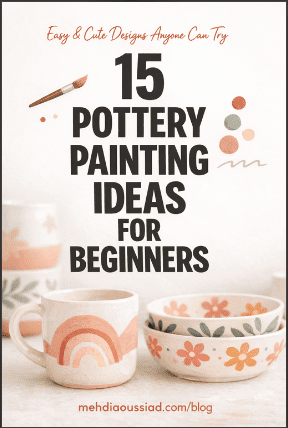
15 Pottery Painting Ideas for Beginners and Artists
Pottery painting ideas are one of the easiest ways to turn plain ceramics into something personal and eye-catching, even if you have zero experience.
You do not need advanced skills or expensive tools. A simple mug and a few colors are enough to create something you will want to use every day.
If you feel stuck or think your designs will look messy, you are not alone. Most beginners struggle with where to start and what to paint.
The good news is that simple ideas often look the best, and small details can make your piece stand out.
In this article, you will find 15 pottery painting ideas for beginners that are easy to follow and look clean when finished.
Each of these ideas focuses on simple shapes, minimal colors, and designs you can complete without stress. So let’s get started.
Note: Some links in this article are affiliate links. If you buy a product using our link, we might get a small commission at no cost to you.
What You Need to Start Pottery Painting
You only need a few basic tools to start pottery painting. Focus on simple materials that help you control your design and get clean results.
Here are some essential supplies:
• Ceramic piece: Choose a smooth mug, plate, or bowl. Plain white surfaces are easier to paint and show colors clearly.
• Brushes: Use a small round brush for details and a medium flat brush for filling shapes. Avoid stiff brushes since they make lines harder to control.
• Paint: Use acrylic paint for decorative pieces. Choose ceramic or porcelain paint for a more durable finish.
• Palette: Use a flat surface to mix your colors. A plastic palette or even a plate works well.
• Sealant: Apply a clear sealant to protect your design. Use a food-safe option if the piece will be used for eating or drinking.
Quick tip:
You can start with a smooth ceramic piece, soft brushes, and two to three colors. This keeps your design simple and helps you avoid mistakes.
Related blog post: How to Paint Flowers Step by Step?
15 Pottery Painting Ideas for Beginners
If you want simple and creative pottery painting ideas, this list will help you get started. These beginner-friendly designs below are easy to follow and help you create beautiful pieces without stress.
1. Minimalist Pottery Painting Ideas for Beginners
Minimalist pottery painting ideas work well when you want clean results with little effort. These designs rely on simple lines and shapes, so you reduce the risk of mistakes and still get a beautiful look.
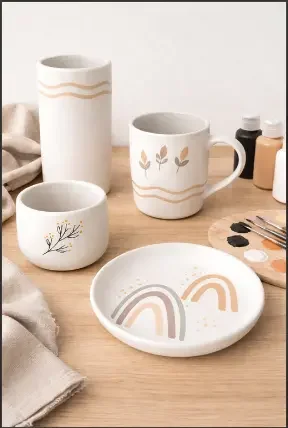
You should start with basic line art, such as abstract faces or continuous lines. These designs look modern and do not require perfect precision. Even slight imperfections add character.
Next, focus on keeping your color palette limited. Using one or two colors helps your design look intentional instead of messy. This approach also makes it easier to control your brush.
Finally, think about placement. A small design placed in a visible area often looks better than covering the entire surface. Space helps your design stand out.
Tips to follow:
• Use a fine brush for thin, clean lines.
• Sketch your design lightly before painting.
• Stick to one or two colors.
• Leave space for balance.
Related blog post: 11 Easy Painting Ideas on Canvas for Beginners.
2. Easy Floral Pottery Painting Ideas
Floral pottery painting ideas are a strong starting point because they look detailed but are simple to create. You can build your design step by step without needing advanced skills.
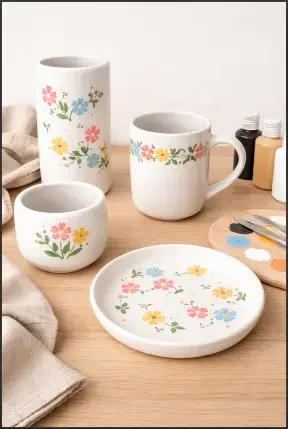
You need to start with basic flower shapes. A small circle with simple petals is enough to create a clean floral look. You do not need to add too many details.
Then, add leaves and small accents around your flowers. These elements help fill empty spaces and make your design feel complete without making it complex.
Finally, arrange your flowers in a clear pattern. You can create a border or group them in one area to keep the design organized.
Tips to follow:
• Use simple shapes for flowers and petals.
• Keep spacing even between elements.
• Use two or three colors only.
• Avoid overcrowding the surface.
3. Simple Polka Dot Pottery Painting Ideas
Polka dot pottery painting ideas are one of the easiest ways to get consistent results. They require minimal skill and still look clean and balanced.
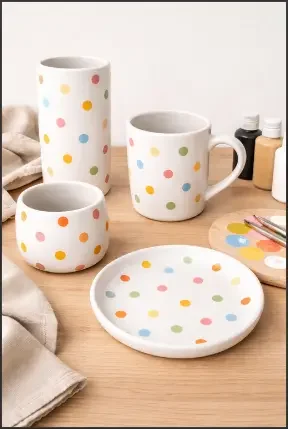
Start by deciding the size of your dots. Keeping them uniform helps your design look neat and intentional. Practice on paper first if needed.
Next, choose your color combination. Simple color pairings often work better than using many shades. This keeps the design easy to follow.
Finally, plan your layout before painting. You can place dots in rows, grids, or random patterns, depending on the look you want.
Tips to follow:
• Use a cotton swab or brush end for perfect dots.
• Keep equal spacing between dots.
• Use contrasting colors for visibility.
• Test your pattern before painting.
4. Geometric Pottery Painting Ideas for Beginners
Geometric pottery painting ideas give you structured designs that are easy to control. Straight lines and repeated shapes help you avoid uneven results.
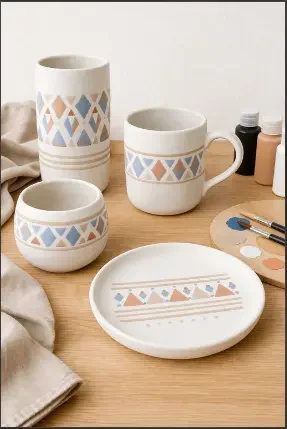
I would say start with basic shapes like triangles, squares, or stripes. These shapes are easy to repeat and create a strong visual pattern.
Then, combine shapes to build more interesting designs. Even simple combinations can make your pottery look more detailed.
Finally, focus on alignment. Clean lines and even spacing make a big difference in how professional your design looks.
Tips to follow:
• Use painter’s tape for straight edges.
• Measure spacing for consistency.
• Stick to two or three colors.
• Check alignment before painting.
5. Cute Animal Pottery Painting Ideas
Cute animal pottery painting ideas are simple and fun. You can create recognizable designs using basic shapes and a few details.
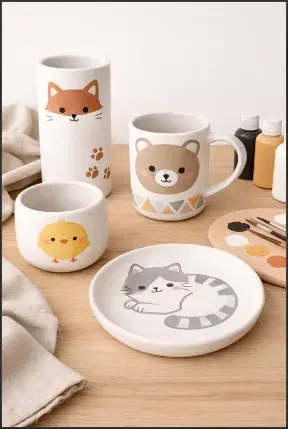
You can start with simple animal faces like cats or bears. Focus on the main features such as eyes, nose, and mouth.
Then, add small details like ears or whiskers. These elements make your design more expressive without adding complexity.
Finally, keep the design centered and clear. A simple face placed in the middle often looks better than a crowded layout.
Tips to follow:
• Use circles and ovals for base shapes.
• Keep features large and simple.
• Use a fine brush for details.
• Avoid adding too many elements.
6. Personalized Pottery Painting Ideas with Names
Personalized pottery painting ideas are perfect for gifts or everyday use. Adding a name or initials makes your piece more meaningful.
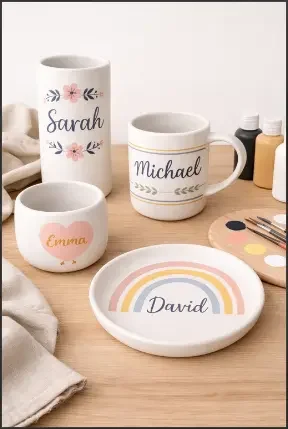
Start with a simple lettering style. Clear and readable text works best, especially if you are new to painting.
Next, add small decorative elements around the text. This improves the overall design without making it difficult.
Finally, focus on placement. The text should be easy to read and well-positioned on the surface.
Tips to follow:
• Sketch letters before painting.
• Keep spacing even between characters.
• Add minimal decorative details.
• Place text in a visible area.
7. Sunset Pottery Painting Ideas for Beginners
Sunset pottery painting ideas help you practice color blending while keeping the design simple. They look impressive even with basic skills.
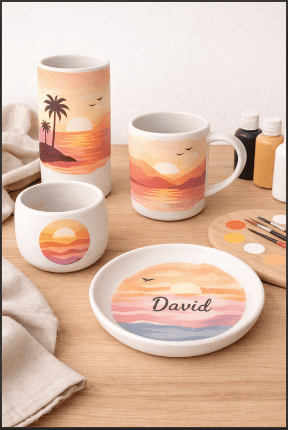
Start with a gradient background using warm colors. Blend them while the paint is still wet to create a smooth transition.
Then, add simple silhouettes like trees or mountains. These shapes create contrast and make the design stand out.
Finally, keep the design minimal. The gradient should remain the main focus.
Tips to follow:
• Use a flat brush for blending.
• Work quickly before the paint dries.
• Use dark colors for silhouettes.
• Avoid adding too many details.
8. Heart Pattern Pottery Painting Ideas
Heart pattern pottery painting ideas are easy to repeat and work well for beginners. They create a clean and consistent look.
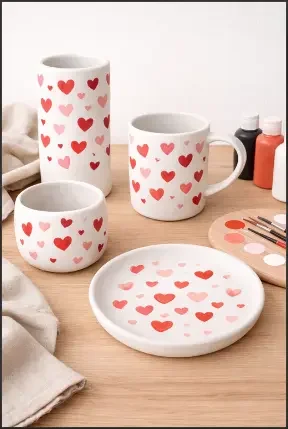
Make sure you start by drawing small heart shapes. Keep them similar in size for a balanced design.
Then, repeat the pattern across your surface. This helps create a uniform and organized look.
Finally, choose a simple layout. You do not need to cover the entire piece.
Tips to follow:
• Draw hearts lightly before painting.
• Keep spacing consistent.
• Use one or two colors.
• Leave some space.

9. Abstract Pottery Painting Ideas with Brush Strokes
Abstract pottery painting ideas give you freedom to experiment. You do not need perfect shapes or precise lines.
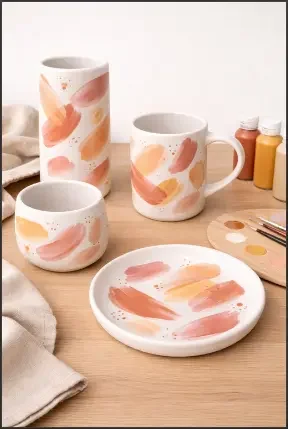
You should start with loose brush strokes. Vary the direction and pressure to create texture.
Next, limit your color palette. This helps your design look intentional instead of random.
Finally, focus on balance. Even abstract designs need a clear composition.
Tips to follow:
• Use two or three colors only.
• Spread strokes evenly.
• Avoid overcrowding one area.
• Step back and adjust placement.
10. Fruit Pottery Painting Ideas for Beginners
Fruit pottery painting ideas are bright and easy to create. They rely on simple shapes and bold colors.
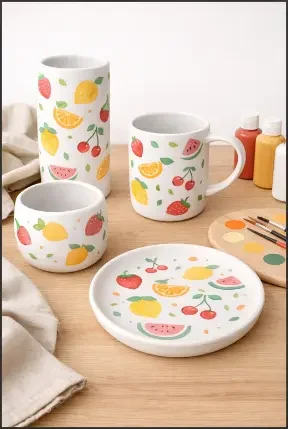
You need to start with basic fruit shapes like lemons or strawberries. These are easy to draw and paint.
Then, repeat the fruit across the surface. This creates a fun and consistent pattern.
Finally, add small details like seeds or stems to complete the design.
Tips to follow:
• Use simple shapes as a base.
• Keep colors vibrant.
• Repeat the same size for each fruit.
• Add minimal details.
11. Simple Mandala Pottery Painting Ideas
Mandala pottery painting ideas look detailed, but can be simplified for beginners. They focus on repetition and symmetry.
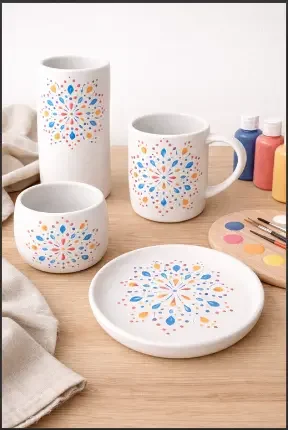
Start from the center and build outward. This helps you maintain balance in your design.
Next, repeat simple shapes like dots or petals. Consistency is more important than complexity.
Finally, keep the design clean. Simple mandalas often look better than complex ones.
Tips to follow:
• Use a central guide point.
• Repeat shapes evenly.
• Limit your color palette.
• Focus on symmetry.
12. Ocean Theme Pottery Painting Ideas
Ocean-themed pottery painting ideas are calm and easy to design. They use simple shapes and soft colors.
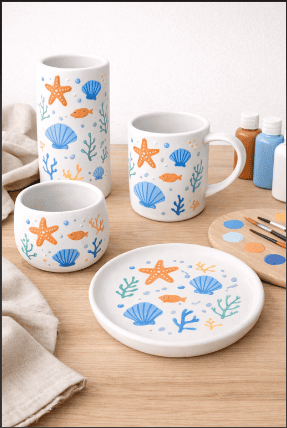
Start with basic elements like waves or shells. These are easy to draw and paint.
Then, combine a few elements to create a simple scene. Avoid adding too many details.
Finally, focus on color harmony. Using similar shades keeps the design clean.
Tips to follow:
• Use blue and white tones.
• Keep shapes simple.
• Balance elements across the surface.
• Avoid too many colors.
13. Checkerboard Pottery Painting Ideas for Beginners
Checkerboard pottery painting ideas create a bold and structured design. They are easy to plan and execute.
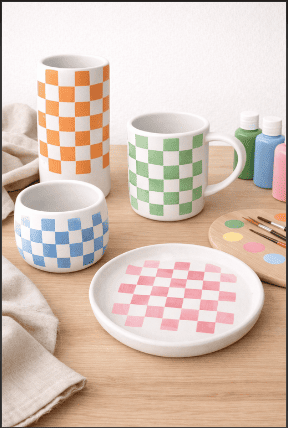
Start by dividing your surface into equal squares. This step is important for a clean result.
Next, fill alternating squares with color. This creates the checkerboard effect.
Finally, clean up edges to keep lines sharp and consistent.
Tips to follow:
• Use tape or a ruler for straight lines.
• Keep squares equal in size.
• Use two contrasting colors.
• Let the paint dry before removing tape.
14. Word and Quote Pottery Painting Ideas
Word and quote pottery painting ideas are simple and meaningful. They work well for personal use or gifts.
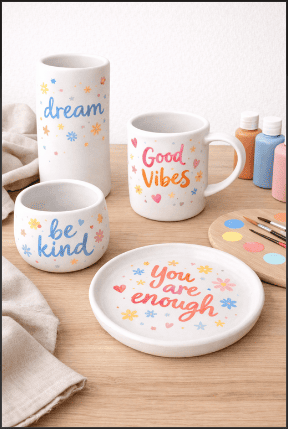
You should start with a short word or phrase. Keep it easy to read and not too long.
Next, add small decorative elements if needed. Keep them minimal so the text remains the focus.
Finally, make sure your text is well placed and aligned.
Tips to follow:
• Sketch your text before painting.
• Keep letters evenly spaced.
• Use simple fonts.
• Avoid clutter around the text.
15. Drip Effect Pottery Painting Ideas
Drip effect pottery painting ideas create a modern look with minimal effort. They are easy to achieve and look unique.
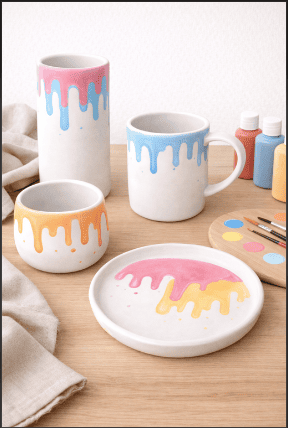
Begin by applying paint near the top edge. Let it drip naturally down the surface.
Next, experiment with adding a second color. This creates more depth in the design.
Finally, keep the rest of the piece simple so the drip effect stands out.
Tips to follow:
• Use slightly diluted paint.
• Control the amount of paint applied.
• Let layers dry before adding more.
• Keep the base clean.
Related blog post: 13 Abstract Art Painting Ideas on Canvas.
How to Seal and Finish Your Pottery
Once your design is complete, sealing your pottery is important if you want it to last. A proper finish protects the paint from scratches, fading, and water damage.
Start by letting your paint dry fully. Rushing this step can ruin your design, especially if you apply sealant too early. Drying time depends on the type of paint you used.
Next, choose the right sealant for your purpose. Decorative pieces and functional items require different finishes. This step affects both durability and safety.
Finally, apply the sealant evenly. A smooth coat will protect your design without affecting how it looks.
Tips to follow:
• Let your painted piece dry for at least 24 hours.
• Use food-safe sealant for mugs, plates, and bowls.
• Apply thin and even coats instead of one thick layer.
• Allow each coat to dry before applying another.
Common Mistakes to Avoid
Beginners often make small mistakes that affect the final result. Knowing what to avoid helps you save time and get cleaner designs.
One common mistake is using too much paint. Thick layers can lead to uneven surfaces and longer drying times. This also increases the risk of smudging.
Another issue is skipping drying time between layers. When paint does not dry properly, colors can mix in unwanted ways, ruining details.
Finally, many beginners forget to seal their work. Without protection, the design can fade or chip over time.
Tips to follow:
• Use thin layers of paint for better control.
• Let each layer dry before adding details.
• Clean brushes regularly while painting.
• Always seal your finished piece.
FAQs About Pottery Painting Ideas
Here are some frequently asked questions:
What paint works best for pottery?
The best paint depends on how you plan to use your pottery. Acrylic paint works well for decorative pieces because it is easy to use and dries fast.
If you want a more durable result, ceramic or porcelain paint is a better option. These paints are designed to last longer and resist wear.
If your pottery will be used for food or drinks, always check if the paint is labeled as food safe. This ensures your piece is safe for daily use.
Do you need to bake painted pottery?
Baking depends on the type of paint you use. Some ceramic paints require heat to cure and become more durable.
Acrylic paint does not require baking, but it still needs a sealant to protect the surface. Always read the instructions on your paint to avoid mistakes.
If baking is required, follow the recommended temperature and time. Let the piece cool inside the oven to prevent cracks.
How to make pottery painting designs last longer?
Durability depends on how you prepare and finish your pottery. Proper sealing plays a major role in protecting your design.
You should also handle your pottery with care. Rough cleaning or frequent exposure to water can reduce the lifespan of the paint.
Hand washing is a better option than using a dishwasher, especially for painted pieces. This helps maintain both color and finish over time.
Conclusion
As you can see, pottery painting can be simple to start and improves with practice. You can create clean and professional designs by focusing on simple ideas and consistent techniques.
I recommend that you start with easy designs, limit your colors, and take your time with each step. Small improvements will make a big difference in your results.
So feel free to try different ideas from this list and build your own style as you gain confidence.
More blog posts: